
Flash Nonfiction selected by Shuly Xóchitl Cawood
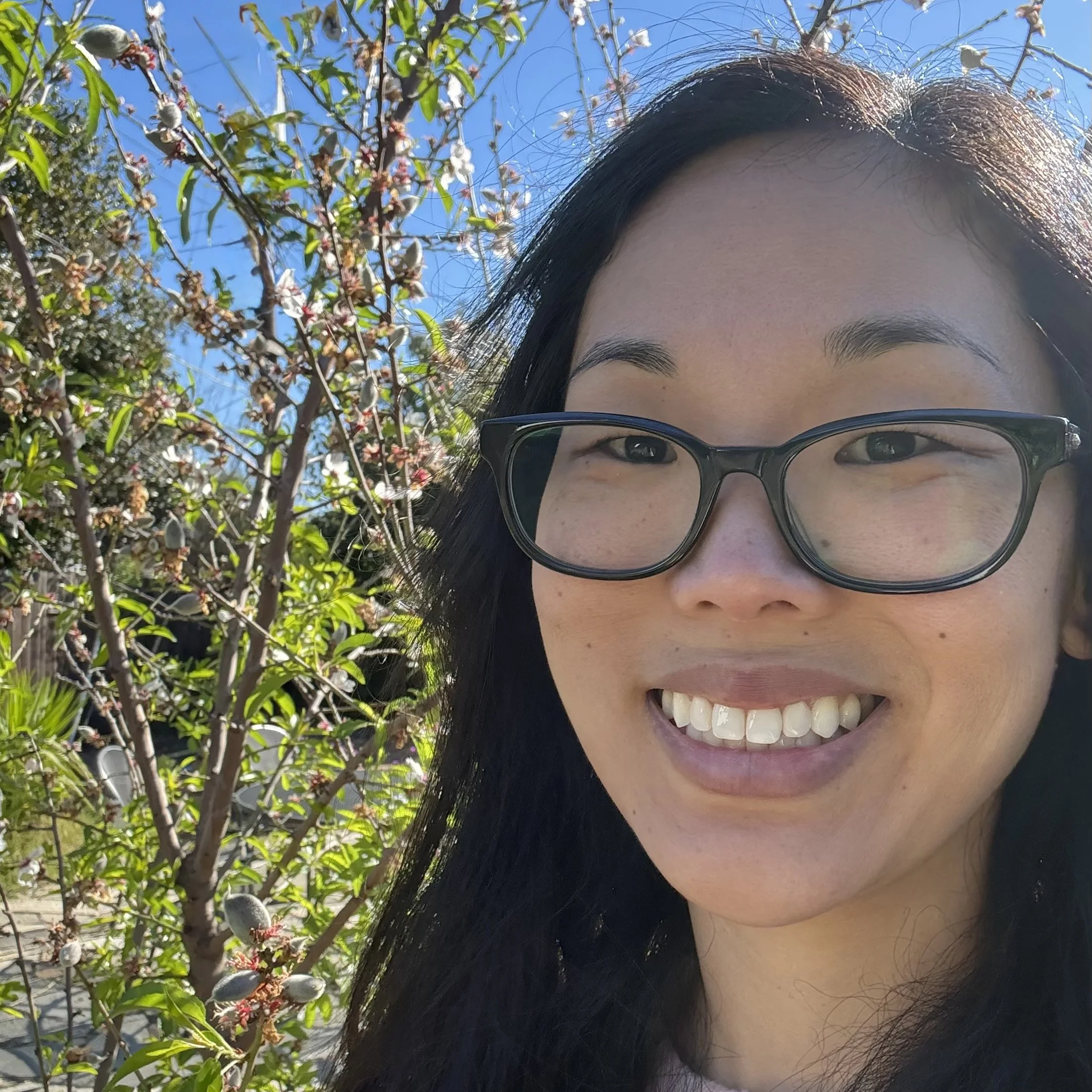
Seychelle De Luca
“Make a Pretty Face”
Make a Pretty Face
You’ve never heard of eyelid tape. It’ll give you a double lid, Orchid explains, make your eyes bigger. Orchid is a makeup artist who specializes in wedding hair and makeup. She’s the first one you found in Sacramento with five stars on Yelp.
“Your mommy or aunties never show you before?” she asks.
You don’t get into the minutia. You were adopted from Seoul as an infant, and most of the women in your life are white and aren’t concerned with their eyelids. You grew up being told it’s what’s on the inside that counts. You shared this mindset until you were in college where you were informed: ignoring race is wrong, backwards, insensitive.
“Since this is just a trial, why don’t I include it and you make your decision after?” she says, already digging in her vanity.
You agree that seems reasonable.
The bright bulbs around the vanity mirror shine as brightly as that Friday you wore your Brownies vest on picture day. You were eight years old, standing in line behind the theater curtains, waiting to have your school photo taken.
“Next,” the cameraman called.
You fell onto the director’s chair. Smiling, you made sure your teeth showed since your mom will expect it. You couldn’t see the man because the lights were so bright. You only saw a silhouette, a shadow figure.
Raising his head over the camera, the shadow figure told you to open your eyes.
The lights heated your cheeks, and you widened your eyes. Your eyes began to water, and you worried you’d lose the staring contest with the lens.
“Make a pretty face,” the shadow figure said. “Come on, open your eyes.”
You widened your eyes and tried to keep from raising your eyebrows. You could tell by his stillness that the shadow figure thought you were bad, that you were a punk, that you were ugly. The camera flashed and he yelled for the next student.
You blinked blinked blinked and worried your eyes were stuck.
Now, Orchid asks you to close your eyes as she applies the tape, which is rough and curved like a toenail clipping. Even after she applies eyeshadow to both lids, you can still make out the faint outline of the tape above your eyelashes. She thinks the tape is a good idea. You give her a check and head out.
You park and tilt the rearview mirror. On any other day, you’d wear, at most, a few swipes of mascara. This woman with several layers of foundation, blush, eyeshadow, and artificial creases in each of your eyelids is unrecognizable.
You know your mom will say you’re beautiful just as God made you, and your fiancé will say you don’t need to wear any makeup at all. But you think of the boys who pulled their eyes back with their fingers and asked if you saw in widescreen. You think of being asked if you were sleeping because it looked like your eyes were shut. You think of the peers who said you must be extra smart because your eyes make you extra Asian. You think of the government that created internment camps, the terms twinkie and banana, and that one in five Korean women undergo plastic surgery to create the double lid.
You think of the after-school specials you grew up with where everyone accepted one another. You were raised believing that people should love their neighbor as is, unconditionally. You feel an itchy heat travel from your toes up your torso, and you have to get the tape off.
Now.
You begin swiping at the tape, trying to catch the edge and once you do, you pull it off like a scab. You do the same to the other. It’s only after you’ve done this that you see a crescent of your own skin where the tape was. You widen your eyes as you did when you were eight. You look freakish. You wish you could tell your younger self how wrong that shadow figure was. But you aren’t eight anymore. You feel your cheeks push against the corners of your eyes when you smile, and the itchy heat dissipates like steam from an iron. You will not wear the tape on your wedding day. You will smile how you choose to smile. You will be—you are—beautiful.
###
Seychelle De Luca lives with her husband, two sons, two poodles, and four chickens in Sacramento, California. When she’s not writing, she can be found reading, running, and baking. Prime Number Magazine is the first literary journal to publish her work.
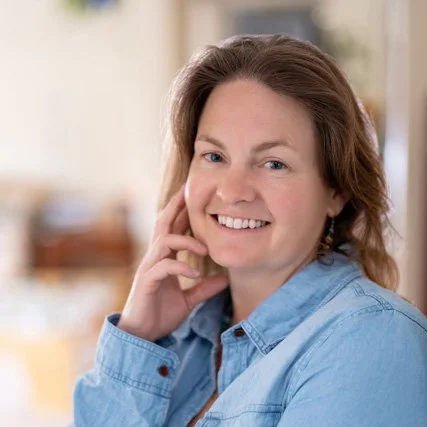
Sunday Dutro
“Home”
Home
We discuss moving to Montana, and I say, “I just want to look out the window, from the safety of my home, and see a bear.”
We are looking for home and are willing to live in our RV through a Montana winter to find it. We sell everything to be here, leave friends and family behind, sure we won’t regret it but unable to get others to understand. My mother worries.
It takes a year of near-daily trips out to the latest property on the market, to properties we can’t afford, to properties we don’t even want. A year of looking at everything and seeing nothing. A year of extending our search further and further out. A year of chasing the elusive dream we call home.
In a little town we’d driven through years earlier, a little town I’d begged my husband to let us move to, there’s a property that’s been on the market a long time, has no activity, surely has a lot wrong with it considering everything else is moving like hotcakes.
My husband goes to look at it: “The house isn’t much, but the property is perfect.”
We close with less than thirty days ’til the first flurries fall. We buck three cords of wood, buy books at the library book sale, scour online for used furniture. We make the double-wide livable with moments to spare, settle in for winter. Grateful.
I slip on a patch of ice hard enough to require a chiropractor every day for weeks, the kids learn there is such a thing as too much snow, and my husband fears we ought to have put up more wood. Still, we are grateful.
Come spring it’s all we can do to keep our kids out of the freezing and swift river, so eager are they to get out of the house. Letting the dogs out in the morning, we startle elk in our backyard. We put up hummingbird feeders a month too soon. We plant seeds that strangle inside, desperate for the ground that hasn’t yet thawed.
By summer we hit our stride. We know when to kayak, where to hike, and which draws hold huckleberries. We clean up acres of neglected land and burn an abundance of overgrown brush. We dismantle what remains of a fencing job we can’t quite understand, and evenings sitting by the pond are now well-earned moments of respite and peace.
It’s the end to another beautiful Montana day, and I am running a bath for the kids, my husband helping them out of their filthy clothing, when I happen to look out the window—as I stand inside the safety of this place—and catch a fuzzy mountain of black stirring on the grass-covered dirt mound we’ve yet to flatten. I realize what it is.
We are finally home.
###
Sunday Dutro lives in Montana with her family. Find her in Herstry, NUNUM, Bear Paw Arts Journal, and at sundaydutro.com
Jody padumachitta Goch
“The Only Person Who Knew You Needed to Get Out While You Could Was Your Stepfather Bill, Who Gave You Advice You Remember Even Now”
The Only Person Who Knew You Needed to Get Out While You Could Was Your Stepfather Bill, Who Gave You Advice You Remember Even Now
Never light your own if you can bum a smoke.
Don’t swing your leg over a horse if it’s looking the other way.
Diesel cars don’t take gas.
Always keep a glove in your car if you carry a bat.
Don’t ever keep a tie iron under your seat.
Mercury makes good outboards but don’t buy their cars.
Remember to check the tide chart.
If you put too much weight on your line you’re gonna catch crap.
Always clean your own fish.
Boys can’t be trusted. All men are boys.
A girl’s best friend is getting home before midnight.
Fanta doesn’t mix well with vodka.
If you end up in AA don’t tell them your name or mine.
Stop smoking before you start coughing.
When I’m dead leave your mom. I can’t save you from the grave.
###
Jody padumachitta Goch is non-binary, neuro-diverse, slightly dyslexic and Canadian. They live in the German Black Forest. Jody’s pockets are full of stories and poems. It’s hell on the wash machine. They hike with their dog, and rescue words from the lint catcher. Jody enjoys reading and editing for Does It Have Pockets and has stories and/or poetry in Wild Word, NPR Poetically Yours, Co-Op Poetry, Third Street Review, Temz Review, and more. www.jodygoch.com

Janelle Victoria
“Bear Lake in November”
Bear Lake in November
The goose swims right up to us on the shoreline, and I say I’m sorry out loud for not having any breadcrumbs or crackers. Truth is, I wonder why it’s still here: Bear Lake in November, western hillside aglow with golden larch and aspen among the ponderosa pine. My boyfriend films the goose with his phone as it dips its beak in the water, sometimes dunking its whole head and slender black neck to peck at the pebbles below. Water beads off its feathers the same way windshields repel rain. I point to the left wing, how it juts out and hangs low on the body, how the feathers splay like fingers.
Another man shows up, throws what looks like dog kibbles on the rocky shoreline. I feed this goose every day, the man says. It has a broken wing, see—can’t fly, can’t migrate. Sometimes it’ll be clear across the lake when I show up, but I’ll shake this bag of food and it swims right over. I called the Audubon Society, but they’d just put it down. Nothing anyone can do.
The man leaves right after, doesn’t wait for the goose to rise from the water and take its slow padding steps towards the food, legs like straws, turning its head this way and that. We wish it well, the goose, and walk the rest of the loop around the lake back to the car. I research on the drive home: turns out geese often sleep in water so the ripples will alert them to predators, and they can sleep with one eye open by turning off just half of their brain. But some of their predators, like raccoons and wolves, can swim, too. I read all these facts out loud in the car. About the wing: if the bones aren’t properly reset and splinted, the goose may never fly again.
I’m not afraid to set a bone, my boyfriend says, and I say nothing in response. I'm not squeamish about blood, but the skeleton of any living thing reminds me of death. Something about our skeletal makeup undermines the magic of existence: broken bones are reminders of the fallible machinery holding us all together.
We’re not afraid of the same things, he and I, which means maybe we’re perfect for each other. I’m more hands off, wanting to set the goose up with its own safe house along the shoreline: a wooden doghouse with straw for nesting, some food and water.
In the end, we leave it up to the man with the kibbles, and most of all, to the goose. But still, I think of the goose as our mornings grow colder and smell more and more like snow, low-hanging fog in the valley, hoarfrost sprouting on tree branches and wheat stubble like feathers.
###
Janelle Victoria is a poet, artist, and educator living in Spokane, Washington. Her writing has appeared in dozens of literary journals, including Driftwood Press, Jet Fuel Review and Hobart, while her paintings have been featured in venues throughout the Pacific Northwest. Janelle is the author of five books of poetry, including Talk Louder (Tulipwood Books, April 2024). As a fifth-generation resident of eastern Washington, Janelle has a deep love for cedar groves, lilacs, and small towns with one main street.