Editor Selections for Issue 283
Poetry & Short Fiction

Poetry
Selected by Adrian Rice, author of The Chances of Harm and other collections.
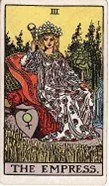
“The Empress (III): Flannel Nightdress” by M.M. Adjarian
“At the Zoo, the Day of the Second Deadliest School Shooting” by Christa Fairbrother

Short Fiction
Selected by Nahal Suzanne Jamir, author of In the Middle of Many Mountains: Stories
“Hectic in the Blood” by Joshua Brorby
Poetry

M.M. Adjarian
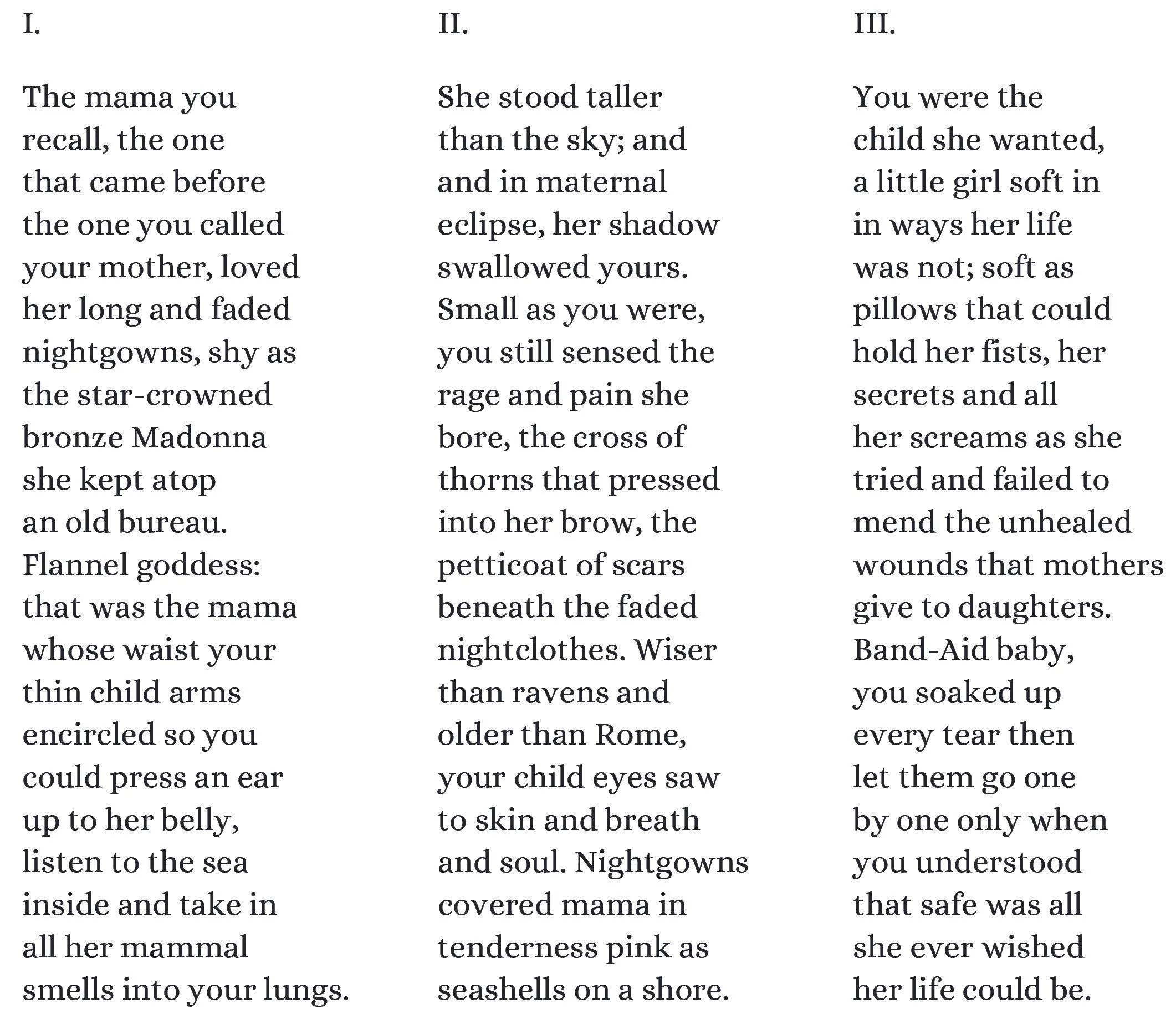
“The Empress (III): Flannel Nightdress”
The Empress (III):
Flannel Nightdress
###
M. M. Adjarian has published her creative work in such journals as Baltimore Review, South 85, Grub Street, The Ekphrastic Review, Eclectica, Crack the Spine, Across the Margin, Common Ground, Stirring, Midway Journal, Gyroscope Review and North Dakota Quarterly. Currently, she is revising a memoir and working on her first book of poetry. She lives in Austin.
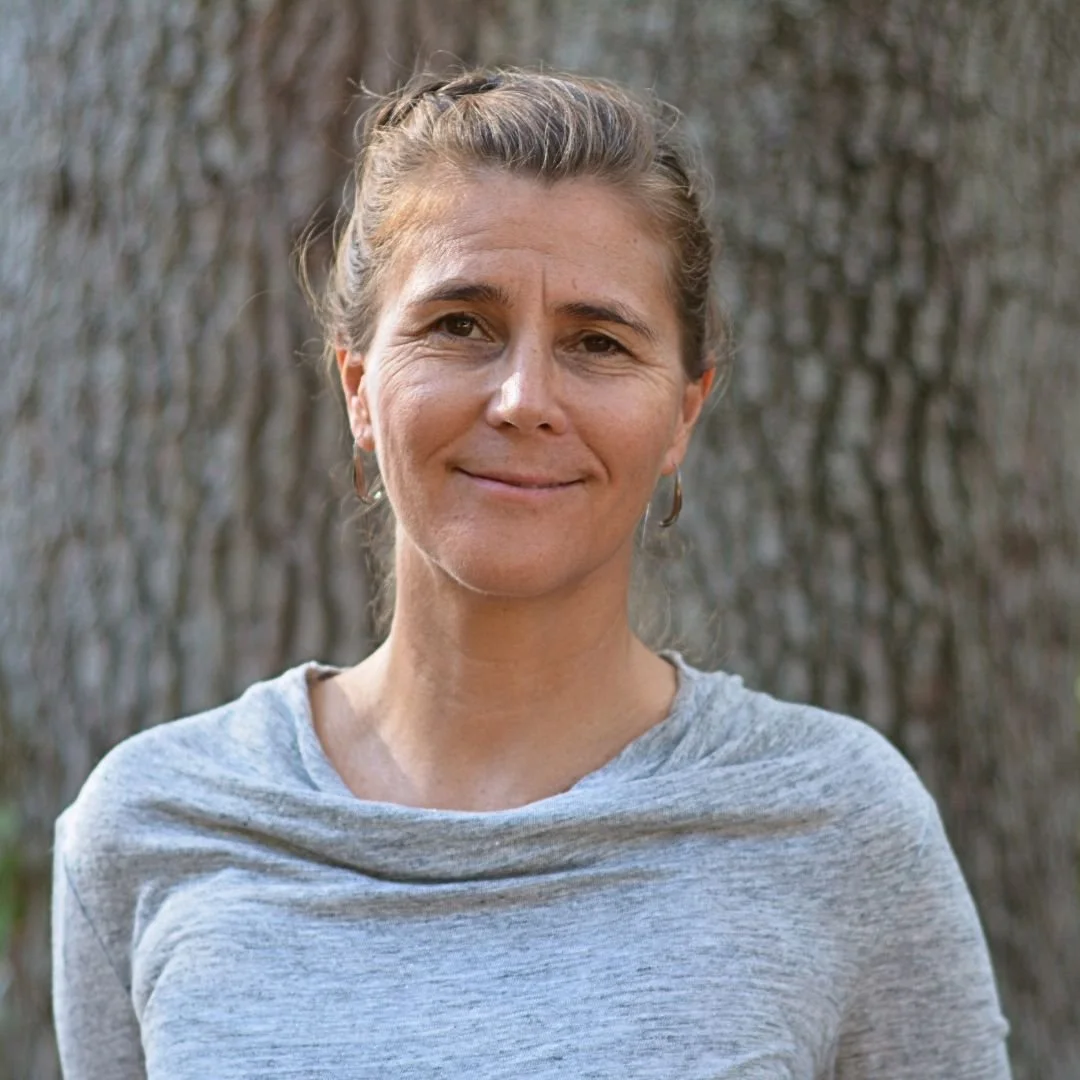
Christa Fairbrother
“At the Zoo, the Day of the Second Deadliest School Shooting”
At the Zoo, the Day of the
Second Deadliest School Shooting
That day we were watching penguins,
originally from hooks,
sandy. Not having thumbs, penguins
were not capable of this
thing, once unthinkable.
The air was heavy with saltwater.
My eyes overflowed. My thumbs swiped
the phone’s news. Safe in his wagon,
my son picked goldfish;
one, two, from a cup’s ocean.
A pinch between forefinger and thumb,
an evolutionary marvel.
I palmed a mother’s worries,
pictured his hands, a man’s hands,
shooting barrels of Fish.
###
Christa Fairbrother, MA, has had poetry in Bellingham Review, Crannog, Epiphany, Pleiades, and Salamander, among others. Currently, she’s Gulfport, Florida’s poet laureate and a poetry editor at Phylum Press. She’s been a finalist for the Leslie McGrath Poetry Prize, the Wilder Prize, and was nominated for a Pushcart Prize twice. Connect with her at www.christafairbrotherwrites.com, on IG @christafairbrotherwrites, or BlueSky @christafairbrother
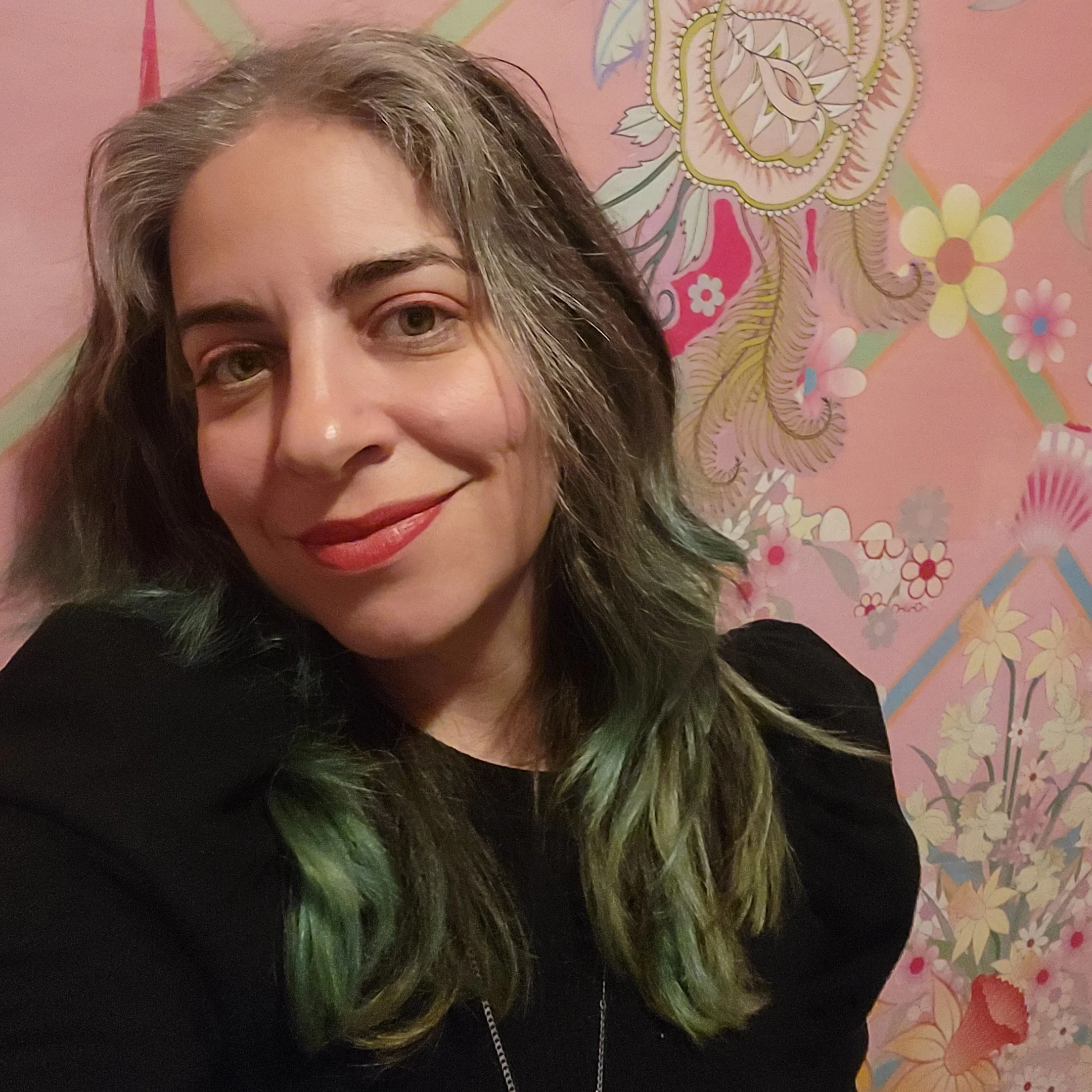
Allison Goldstein
“Construction/Response”
Construction/Response
I. To Construct a Thing Is to Have It
Response seems inevitable
to construction—
My father was an engineer,
his beauty lies in construction.
Bending over blueprints, head buzzing
with equations as he translated
a chalky codex of lines and symbols into
parking garages/hospitals/office towers/
something you could strut around in,
drag your hands along
its corners and edges.
How many lintels and soffits
to form a proper skeleton.
How much rebar to keep
the ceiling from crashing in,
calculating for the rate of decay.
How to build things that last.
II. We Build Our Stories by Hand
To construct a thing (on paper)
is to have it (on paper)
When I was young,
my father and I spoke
an absurd sarcastic shorthand,
calliope of movie quotes and cartoon
catchphrases, rotten puns and subverted jingles
constructed from the same strange sadness,
our thoughts echoed, cynical and moonlit,
grounded in a shared recognition,
even when he’d disappear for days
slipping in and out of promises
like a door that won’t shut.
Stay clean for weeks, sometimes years, then not
answer the phone, then show up three days later like Jesus,
flush with heavy hands and sales-pitch apologies,
his words curling over themselves
like blackened matches.
My confessions coffined in notebooks,
flat and silent as phantoms.
III. Volume Is Measured in Three Dimensions
Each new build follows the same pattern:
First mounds, the red clay and pyramids of rubble
lined up like tombs, followed by stacks of concrete bones,
a ribcage of gray beams crosshatching the sky,
zig-zag tongue tethering each floor, rusted rebar
poking out like broken fingers
Every corner and exit considered.
I moved to New York, then California
Sometimes I write home,
but don’t know what to say.
When I visit, my bedroom
is also my father’s office—
the walls a forest of bundled blueprints,
each wide as a pine and five feet high.
We fight for space
without speaking.
Words colliding midair
like fighter pilots; intentions
collapsed into black stains on the ground.
I watch my poems
grow bones and teeth.
We are still too similar,
but can’t tell each other why.
I lay my stories
at his feet,
a homecoming.
IV. Distance. Movement.
Everything changes,
given enough time
Ten years after he’s gone
I’m sifting through the ghosts
of half-remembered conversations,
like looking at a painting
through a telescope
from another room.
I think of Sappho’s fragments,
the beauty of a moment
that lasts centuries—
and how one day
even your sturdy concrete buildings
will crumble
into
the sea
or implode to make way for something new.
A reminder of what
it means to last;
this distance between us
so exposed
we stretch ourselves across it
like skin reweaving itself.
###
Allison Goldstein is a poet and visual artist from South Florida. She received her MFA from California College of the Arts. Her horror movie-themed poetry chapbook, In The Night, In The Dark, was released by Bottlecap Press in 2025. Allison's work has also appeared in Not Very Quiet: The Anthology, Saw Palm, Last Girls Club, and Maximum Rocknroll. You can learn more about her work by visiting allisongoldsteinpoetry.com

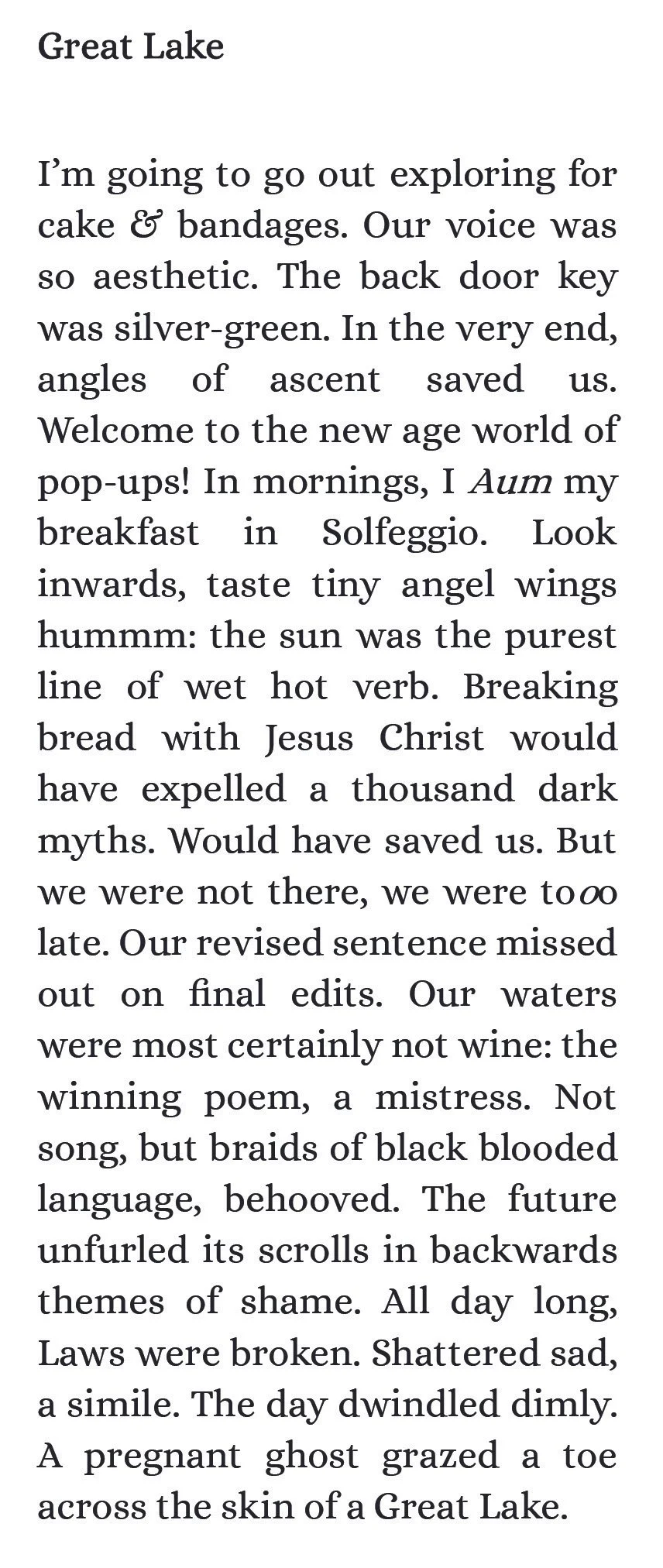
Adam Jon Miller
“Great Lake”
###
Adam Jon Miller's poems have appeared in The Louisville Review, Yalobusha Review, The William & Mary Review, OxMag, Luna Luna Magazine, Ink & Marrow and elsewhere. A selection of Adam's work was translated into Chinese. He was nominated for a Pushcart Prize and is an Associate Poetry Editor at Thimble Literary Magazine. Visit him at www.adamjonmiller.com. Follow him as The House Poet: @im.adam.miller
Short Fiction
Joshua Brorby
“Hectic in the Blood”
Hectic in the Blood
She fell in love with Yttredahl just before he betrayed Christ with a kiss. He was a band boy and a boy scout. He was round and cherubic. People say apple-cheeked and they don’t know what it means until they see an Yttredahl. She was driving to him now for the first time in years with the pedal pressed flush against the floor. Her fingers were shaking and her head rang with two-thousand bells at once and the little hairs on her bare shoulders strained for the sky like she was nude in the yard in dead winter. He had promised one day to wait for Sympathy, and now their promise was to be fulfilled—but pace yourself, you’ve got hours to go before you sleep, as the man in Mrs. Leigh’s class once said. Hours to go before you finally resurrect into his life.
He played the trumpet and he sang on the stage. His face looked like a pie pan filled with whipped cream. He sold out our lord and savior for thirty pieces of silver. It was then, in fact, before the garden, before the crucifixion, that she loved him.
The Chevy Celebrity she inherited from grandpa tended to jerk left when you pushed it too hard. It was kicking and stuttering now when she exceeded eighty-five, so she let off a hair and kept her eye on all those meters and lights. Eleven-hundred miles to go. Hell, or San Antonio. She was making good time.
If Yttredahl knew her as anything among the multitudes back in those high school days, she thought, it was as everyone knew her, as a good time, for what she did rather than what she held in the pen of her lonely chest, because you hear rumors about the girl who did x in the boys’ locker room or y at the back of the bus, and most rumors are only just that but these were true, she admitted without shame, and she repeated such acts flagrantly and never felt shame for it, and never thought to. She was incorrigible, someone said, and after looking up the word in the big dictionary on the lectern in the library, she agreed. A good time. She sounded like her father on the road, Making good time, and the Celebrity was having a hell of a time with only stops for gas, when she would get out, clutching the pepper spray to ward away men loitering near the pumps and fill the tank full, clutching the canister until her knuckles hurt, then drive on, and the roads going from midwest winter to southern warmth and the ice gone though all remained flatland and she had a pretty good handle on things. The absorbent undergarment as the nurse had called it was itching her by the waistline, but it was holding up and she was right, she had been right about that: it was saving her time to wear it. She only had to stop when the big needle swung toward E. Otherwise it was open road to Texas.
She saw him as he appeared back then like a vision surviving death, dissolved into another face seen online, his face now, and she saw them both in her mind floating in front of the windshield with the dotted white line spewing perpetually from his two mouths. He was Judas then, with such vigor of performance that even the lord himself was upstaged, and he was Piggy from Lord of the Flies, the round shell he shrank back into when he had no spotlight and no horn, just the meek set to inherit nothing if not the earth, a sacrificial lump of dough like the boy in the book they read in seventh grade. Yttredahl was two things and he was no thing and he was more, and all the boys she knew and knew alike were unbridled and predictable, desiring, household and humid, but Yttredahl was some odd other, a nonhuman entity, appearing first one way, then, in an instant, under stagelight, taken over by music to another. He did not dance or sing in the halls. No one would ever describe him as rhythmic or cool. He just had something, some easy swing about him, but it only came out when a force in the air demanded it.
Come on now, this thing shudders like an old lady in the bath. She let off the gas and drifted down to fifty-five to cool the engine off. You were a child, and as a child you came to me, she thought. Is that what the old woman used to say? When I was a child, I talked like a child, I thought like a child, I reasoned like a child. Sympathy never thought it wrong to go off with anyone, anytime, to sate those tremblings that tortured her in the dog-hours of the day, but every time she transgressed, in words not hers, she felt mom Bartch’s scathing ghost grip her shoulder over all that wheat and barley. She haunted her in a way no thing ever had, this living woman’s wrath, and all that behavior she called nothing sometimes felt like sin, only because mom Bartch hung over it so.
But then you think about living, and you think, Why would I ever go against my nature? Is it a trial, this life, to quell that feeling and deny it, when it is so powerful, and its quelling so difficult? Can that really be why a person would be put here on this planet? She doubts it. She reapplies pressure to the gas pedal and doubts it very much.
He had a plan, and he saw that plan through, and she had no plan at all and saw that through, too. Yttredahl went to college and studied music, and he joined the Army because his friend Bix had told him that the Army employs more musicians than anyone in the world, and they do, and sure enough he got into a band where they marched in parades and marked the holidays with pomp and brass, and they played for senators and statesmen at banquet dinners where broad men in olive jackets lacquered over bare force with their words, and they gave shape to funerals with rhythm and harmony and Yttredahl alone on Taps, alone and broadly swelling out each round note like a balloon with warm wetness. Now he was at Joint Base San Antonio playing for “Fort Sam’s Own” and the Biohazard Brass, living the free life of a musician he always wanted—kept in the pen of the United States military—and what had she seen through? Only the promise of no promise: a diploma that might as well be a participation ribbon, and mom and dad Bartch kicking her out of the house not long after she received it, then jobs at diners in the so-called city nearby, jobs in catering and hospitality, and just spinning wheels and one damn day after another until you wake up and you’re thirty-three, the age of death and betrayal, and what can you say except life is a parade of flatness and intangibility, and nothing feels real because nothing has felt real since she kissed him by dad’s pigsty on her graduation day, right before he was taken from her for the summer and the next decade and more.
He was a blankness and a vexing, and like no other boy from those days or any.
Near Omaha, she pushed play on the Superstar tape from the thrift store and gritted her teeth at the songs he sang so long ago, the music he sang to me alone, so it seemed to her then before the stage in the old gym. But it drew too strong a feeling from her, and in tears of rage or joy she punched the knob on the dashboard and the knob fell to the floormats and rolled beneath the seat.
Sometimes she wondered if she even knew him. What was he, beyond the terror of the sound of his horn? What made him laugh―did he laugh? Then she focused her conscious thoughts to a hot white dot and shook her aching head: no, the message, he had written the message. “It would be great to catch up.” It was ten years and more, many more, but it was the far end of a promise promised in earnest. “If you’re ever in the area,” and she looked at the green sign hovering above her on the highway: Kansas City ¾ MILE – Salina ↓
Just the face could she glimpse in front of her: the new face in finery and short hair, so different now from what he was: taller and thinner and somehow thicker at once. His face round and cherubic and now less like a pie pan and more like an anvil. No, he wasn’t so firm as that, but he had lost some of what made him Yttredahl, what made him hers, but it was there, she was sure, buried there in him, her same boy, her same man. “If faces were different,” she thought of the only snippet from Lord of the Flies she could still remember from the seventh grade. “If faces were different when lit from above or below―what was a face? What was anything?”
His smile on the internet had appeared with a click and boom, an old feeling had crawled under her skin and wriggled snug against the bone. It was an itching, a fevering, a hot whirl and nausea. It was déjà vu of the weird variety, for an old flame never burnt, a wick in the distance, sparkless fire, and it brought her back to the prairie, the prairie she had left, driving southward, to pining, prepubescent pining, intractable feeling, that stuff hard to pin down and describe, those first underskin feelings that go back, she felt in radio silence and the whipping of wind on windshield, back to our shared room on the second floor of the farmhouse overlooking what felt like endless fields of beet and wheat, back to within sniffing distance, through our open window in summer, of the small pig operation dad kept for extra cash. There she lay awake while Janie slept in her twin bed opposite and traced where in her body those feelings of heave and pressure began. She lay awake for hours with that fever racing down her veins, and her mind’s eye shuttling right alongside it, and Janie snoring and the pigs snoring, too, and the clear sky of night so far from light pollution you could catch the green of the glow of the arctic casting its galvanized shadow down across Canada and onto the drab plains. What was a face―what was anything, when green lights from polar ghosts scratched the lower limit of reality?
Had the Messiah been born to a person on the prairie or a woman in the woodlands, would it have all gone down the same? She rubbed at the itch on her waistline. She pushed the Celebrity past eighty-five. Without silver currency, was it copper plates and conch shells? Was it a scaffold or an earthen mound? In betrayal he might have said, “Surely you don’t mean me, itaƞcaƞ?” And the answer would come back the same, “You have said so.”
She had managed on the day of her graduation to pull him away from some sort of Yttredahl gathering. He came from one of those families where they all like each other. Can you imagine a whole family of these people? Who would do the talking, and who would start a fight? She removed him to her house in the country and shook him by his shoulders in the yard. He just looked at her with that blank look, which made her pine for him all the more, and which made her angry that she was pining. She forced him to walk around the big yard, where the green, knee-high wheat grew right up to the mown lawn. Behind the sheet-metal walls of the pigsty, painted yellow, she asked him straight to his round face what he thought of her.
“Have I ever talked to you?” she asked him. “Have I ever spoken to you, or said hello to you, or even made eye contact with you before today, before this very moment?”
He kept saying “I don’t know” like it was an answer.
“You must know what people say about me.”
“Yes,” he said.
“Do you think it’s true?” He started to say what he always said, and she cut him off. “Does it matter if it’s true?”
“Matter for what?” he asked.
Matter for what? For me, my life, for everything. Can you understand this human feeling, really and truly? “Is it so bad? Is it sinful? Would it matter, to you, who I am? Would it make a difference?”
He eyed her like a quivering pure one with no idea what to do, but the stark truth was on that warm, late afternoon that Yttredahl could determine everything about her future with a simple judgment from his lips, and if he said it mattered, and he left her there with the piggies in their pen, then she too might as well go off to market and be done with it―what next thing did she have, after the diploma and the empty fields? She was young, they told her, she didn’t have to decide on a future, they said, but everything already felt decided, as fixed as the cross in the loam of the earth. So push me, she wanted to say to Yttredahl, make me something, turn me into a disciple of some passion of yours, some sound and vibration, just make me live, or someday soon, or someday far from now, I’m going to disappear completely.
He worked up what looked like courage and said No. “It doesn’t matter to me.”
Then she shoved him against the metal siding where the pigs lived and kissed him. The next sign said Oklahoma City. She tried the tape again, and Judas pleaded with her, He scares me so. When he's cold and dead, will he let me be? and she shuddered and pushed the bare little circle under the broken knob. It’s almost as if I have no choice in the matter, she thought, as if I’ve never had a choice, as if something else’s blood or providence calls the shots, and I’m just along for the ride. She pushed from her mind everything but his face, which was two faces in one and no face, but the prairie still pursued her, and a feeling she didn’t want to feel drove her, and I had no say in the matter and I never have.
Somewhere outside Waco she panicked, she didn’t know his address and she searched frantic for it as the car pitched between the lines on I-35. She jerked the wheel this way and that and flicked her eyes up and down. It takes so damn long to drive across Texas, longer and taller than the whole rest of the trip, and no sleep for twenty-four hours now, mom and all that having set her off. Finally feeling free. She had grabbed the pack of absorbent undergarments from the hospice bedside and ran for it, down to the pigsty and the Celebrity, and laughed as she did it, laughed and shocked them all with her laughing. It became real, in an instant: the truth that she could run to him, and her journey would be ordained.
Magnolia Drive. She found him on google and noted the big three numbers hanging by the porch on the house. She felt a big Yes jolt through her whole body. It is actually going to work. She was not one to make plans, and planlessness had brought her nowhere, and now when she hastily took the Celeb and cooked up a plan in that single minute from mom’s room to the gravel drive off the highway it was working out, it was actually working out, two and a half hours to go, if the morning traffic in Austin doesn’t slow me down. A quarter of a tank. Clutching her pepper spray. One more stop, and a quick diaper change right there at the pump with the men gawking or turning away redfaced, then it’s hell or San Antonio.
Phase two: I’m in the area. I need to make him know I’m in the area. The house on Magnolia and it’s just near a park, a big park, and you’re strolling in the park, you’re walking in the garden. It’s supposed to be nice, it said on the map. You are in the garden and it’s good. Her mother said she was born with it. That it had been with her since birth. Well what about you, mother? What pangs did you suffer in your dumpy teenage years? It came from somewhere, didn’t it? The Celebrity jerked leftward and whined on the rumble strips. Get it together. Her mother said she was born with it and she hadn’t been back to the little house on the prairie since mom and dad Bartch kicked her out. Yesterday she returned only because Janie sent the ominous promising text It’s time, then she stood in the yard within earshot of the pigs, who were awfully quiet in their straw and slurry, and she was looking up at the farmhouse and its cracking wood siding and the brick chimney threatening to collapse under its own pointless weight, and it was rushing through her, and so was he, by proximity to the pigsty, his memory thrust back into her soul and the pigs another portent, and that text from Janie like a signal, this is it, like a beckoning by conch to gather and make plans. She would move the boulder, look out below, and she would find him crushed or gone.
Buda, San Marcos, Selma. Yes, yes, yes. She is blowing through the suburbs. She is taking the exit. Something moved her. She thought maybe it moved him, too.
Somewhere back in the moldering house on the prairie where she grew up, her mother’s heart beat with rapidity. She had left her in an in-between state. She had run out the door with her mother barely hanging on. Now the blood zipped through her veins with frightful speed, and she breathed shallow and fast, and her father was out of the room with the nurse and Janie was in the bathroom when she clutched at her bedsheets and tipped over, sweating, to the pillows by her side. They had just gone out of the room when she blew her breaths faster and faster, hot breaths of no comfort, hot gasps at warm life, and they were just out of the room, just outside when her blood ran feverish and hectic through her veins, and she sighed lowly and with a great cavernous release, and her blood slowed, and her breathing slowed, and her sweat cooled until her being ceased up and came to a stop. And Sympathy thought how her drive across the Dakotas through the dust of tornado alley down to the tip of terrible Texas felt somehow ordained, and maybe she was lucky, maybe even blessed. She left with her mother in an in-between state. Now somewhere far away in a past fully past in a house on the prairie by the diffident pigs, the heat of her blood was dropping. Sympathy had blown a kiss to Janie as the Celebrity kicked up dirt on the way out. Janie covered her lips to keep it out―the kiss or the dust, she wasn’t sure.
She is pulling up now to the nice house on Magnolia Drive. Find a spot on the street, walk away through the park, happen upon him outside his house, funny running into you. It will be natural, it will be fate. “If you’re ever in the area,” and here she is, she has found him, she will have him, and a spot on the street and a spell in the garden. She is pulling up to the nice house on Magnolia Drive where a slick black sedan glows in the narrow driveway. She is waiting for the sound of his terrible horn.
Sympathy is at the end of the drive and she’s standing there stiff and her arms are shivering in the heat of the morning sun. She is shaking, absolutely shaking and trembling in the midmorning sun. She is at the foot of the drive, and a well-dressed woman in designer heels clomps gracefully from Yttredahl’s porch to the black vehicle. She is getting in the glowing black sedan. She is starting her engine. Sympathy shivers up to the driver’s side door and grins at the well-dressed woman on the dark leather seat gripping the wheel and jumping at the sight of her. The woman lowers her lips in disgust and Sympathy slaps the window with the flat palm of her hand and says, “Where is he, where is he?” The woman grits her teeth and says “Ahh,” and Sympathy slaps the window again and thinks, what is she doing she’s coming on too strong, and she says, “Can I have a ride? You remember me, give me a ride,” and the woman shakes her head and shifts the car to reverse but the Celebrity is blocking the road and Sympathy is at the window, saying, “He’s just the same, isn’t he? He’s just the same as ever,” and she yanks at the car handle and the woman says, “Get away,” and Sympathy says “What?” and the woman cracks open her window and pleads with moist eyes and a high voice, “Please leave me alone.” Sympathy starts to cry at the sight of this woman, this unexpected woman at his house, who are you, her face straining, tears sliding down the grime of her cheek, she is crying and she jams her fingers through the gap in the window and says “Ahh” when they get stuck, and with her other hand she raises the pepper spray from her side and looses a hot stream of liquid irritant into the vehicle, into the face of the well-dressed woman on the leather seat behind the wheel of the glowing sedan, and she covers her own crying face and wails and the sedan rolls backward in slow motion toward the Celebrity with Sympathy stumbling stuck alongside it, wedged in a finger trap, still streaming hot liquid through the window, still weeping, still sweating and crying for him. The sedan thuds against the Celebrity and someone is yelling from another place with another voice, and she thinks, Have I changed? She thinks that time is no help at all, and her feelings go up and down without mercy, and she cannot say she has changed, in truth, he is here, and she has not outgrown the prairie and the pigs, and he is here, and he is far away, and she is no closer. Do I not know how to love him? Do I do not know how to live with the force of his existence? She writhes at the wailing of the woman now and falls halfway to the ground, her fingers lodged between door and window, half her weight suspended and dangling by the red swelling fingers in the trap, one knee grazing scraping on the concrete, and she waits weeping with the wailing woman for whatever thing will come next, from whatever place, sinking and thinking, thinking with her, feeling for this woman who drags her along the earth, We have only the garden, and the ear, and the agony, and we will sweat blood if we have to.
###
Joshua Brorby is an American writer in St. Paul, Minnesota. He was born and raised in rural North Dakota, where some of this story takes place. He has taught English literature as a precariously employed academic at several institutions in the U.S. and abroad, and he is currently at work on a novel. His first published short story came out last year at J Journal.

Stacey C. Johnson
“Nightjar”
Nightjar
OUT HERE
Lately, it’s sky things I notice: birds, stars, and all these invisible pieces, floating away.
When I’m not on the road, I go on the porch at night and listen.
Out here, you learn the names of moons because they dominate the sky. July was When Limbs of Trees are Broken by Fruit. October brought the Harvest Moon—an orb the size of a dinner plate on the windshield, so bright it makes flashlights redundant and your bones and your crotch ache at the same time, an arthritic kind of lust. I found Eli during the time of the January Wolf’s Moon, a time of year when dogs had been known to howl hungrily outside Indian villages.
There’s a new bird I’ve been noticing lately, its cry like a wheel spinning.
It’s like the kite-string tug I’ve been getting when I drive: up and away, and there I am looking down at a small body in an oversized rig, mile after mile. Or now, standing on the desert floor, mouth open like I’m about to make some cry of my own, if only it would come.
I’ve been trying to figure the names: these birds, these stars, and other things.
I think this one’s a poorwill. They also call it nightjar. I read somewhere that its cry is the kind of sound that made ancient people think it was carrying the spirits of the dead—and the un-born, I think.
DRAWING NEAR
On the approach to Mesa, signs increase in frequency.
Entering Globe Historic District. Besh-Ba-Gowah Museum. Boyce Thompson Arboretum State Park.
At Superior, there’s a billboard for a new kind of french fry, followed by another for reverse vasectomy operations, shouting Don’t Wait!
Flying J, announced a billboard. APACHE JUNCTION EXIT. CLEAN BATHROOMS! SHOWERS! 24/7 DINER! LOOSE SLOTS! $$$! COME ON IN!
Before I drove line-haul, billboards were just another thing to pass at eighty miles an hour. Now I read them.
I was on the return leg of a run to Albuquerque. I pulled in beneath the fluorescent glow of a rotating neon emblem that towered over a sea of blacktop. A faded sign whispered beneath it: Welcome to Apache Junction—Gateway to the Valley of the Sun.
I would shower, eat, take a nap. Wake a few hours later for coffee and fuel and head out.
I could be a stranger to myself when I flew like a kite, so by the time I arrived there I was—full sail, silhouette in a cab like the driver of some great ship circling under the lights of some pivotal way station. I saw others like me, migrating from origins unknown and from recent destinations that were easy to guess at—Kingman, Blythe, Flagstaff, Nogales. El Paso, Santa Fe, Vegas. Men—a few women, too—living in transit, manning the wheels of massive rigs. The machines would carry on, needing less and less fine-tuning as the years progressed, until nothing of any original form was left.
HERE A BIRD
A week before I found Eli in a ditch, I found a bird on my truck at the Pilot station in Victorville. The paper called him Dusty the Parrot, but it was actually a cockatiel.
He was hot and panting something awful. I thought he looked male. I called him Bud. Turns out Bud was a ladybird, but I didn’t go hunting around.
It was late December, a few weeks after the floods. Strange weather, everyone was saying. After paying the cashier and grabbing an oversized Coke, I walked ’round the truck, giving the usual once-over. There he was, behind the cab, perched on the catwalk—staring and panting.
I looked around, wondering where the hell he came from. There were some shrubs down the hill a little ways. Gray-brown and mostly bare, though. Not exactly a place you’d picture as a habitat for a fluorescent blue-green bird.
He turned his head to focus his dark eye on me, as if he had a question.
“Hey, bird.”
He just stared back.
I had some water in the cab. I poured it into the lid of my thermos and set it next to him on his perch. He leaned in with his hooked beak, gulping. When he was done, he looked back at me—same stare.
“Hey, Bud.” I held out my arm at an angle, not exactly sure what I was doing.
He hopped closer, leaned in and back, a little rocking dance. Then he hopped again—right onto my forearm. I was kind of surprised by the weight of him. Not heavy, just solid.
We stared back and forth.
“Okay, Bud,” I said. “You can ride up here.”
We climbed in the cab, and he found a perch on my shoulder. We drove home, and that bird stayed with me for a few weeks before I saw the special on the news: a gray-haired woman crying about her lost cockatiel. If anyone has any information about Dusty, please call this number.
I did, eventually.
The bird loved popcorn. I’d cook a whole pot some days, same as I used to make when it was me and Kora, and that bird would damn near eat my portion too. I worried he’d get sick, but he just walked around, energized—pecking at other things: baked potato, grapes, catfish.
“How did you know it was her?” a reporter asked.
“I didn’t,” I told him. “Bird just showed up.”
Sometimes everything gets stripped away, and all that you’re not watching for falls apart. A wife gets cancer. A son disappears. A fire consumes your home. So you move out to a plot of land you bought on the side when you were newlyweds, sight unseen, because the ad in the paper said Don’t Miss Out!
But then you’re not looking for anything, and somebody’s missing bird—the one they’ve been making flyers for and crying about—just shows up behind the cab of a truck, like he’s waiting for you.
It was kind of the same with Eli. I found him about two weeks after Bud showed up.
REMAINS
When you’ve got a body and something to hold onto, it’s called remains. Before they’re buried, anyway. After that they’re just—
—.
Kora wanted to be cremated. She was firm about it, on account of the cost of land and the space and everything.
When you get what’s left over after the remains are burned, it’s called cremains.
Made no difference to me, what it was called. I had to hand it to Kora, though. She must have had a hunch.
In the urn, Kora—the cremains, anyway—fit just right in the passenger seat. I had her pillow and some towels and I duct-taped the lid of the urn and buckled her in and we went on runs together. It worked out, because I’d been running solo since her chemo, on account of my schedule being uncertain, and my old partner, Bob, had moved on.
On Cedar Street and Sage Avenue, in a community optimistically named Paradise Valley, most of us are transplants from more secure establishments. Reasons remain a mystery. Maybe it’s unemployment and a chance to buy a little time; maybe it’s carving a space big enough to have a garden, even if the lawn in summer is turf and potted cactus. For a young couple, dewy with hope, places like Paradise Valley are a response to a prophetic-seeming ad in the Sunday paper announcing Don’t Miss Your Chance To Own.
For me, it was a blank slate—a home where every surface and every room didn’t remind me of everything gone.
But in the quiet hours, when I head out to the porch in the evening, I get reminded of all kinds of things, and lately about half of them seem almost new.
UPDRAFT
It tends to come with the periods of silence and stillness that coincide with my time between runs, during which I generally try to drive as little as possible. Not long before I found Dusty, it first happened, and since then it’s got so common that sometimes a long stretch goes by and I hardly notice.
It goes like this: first a slight pressure at the base of the skull, almost like a fingertip. Then a slow backwards pull—out and up—like the part of me capable of looking is being sailed like a kite.
The first time, I saw a small figure on a small porch attached to a house dwarfed by the rig beside it, and then again by the land and sky. Unarticulated questions flapped in the wind like loose sails when a storm’s coming.
From that height I’d look on, noticing the distance between the lens and the place where I had just been standing. Look down and there he was: man in yard against wide swaths of sand, keeping watch.
FRAME OF REFERENCE
Once, the ground was the thing under my feet, and it didn’t matter if it was dirt, sand, rock, the kitchen linoleum, or the floorboard of a vehicle. There was enough to question, but at least some things were certain.
Before, there was Kora—sudden as ball lightning.
I found her in an apron and a ponytail at a church picnic, which was the sort of affair I never would have attended except I’d heard that Leila Rue had been asking around about me. Leila Rue was an active member of the ladies choir and also of the parking area at the end of King’s Road, and I was still wet behind the ears. She was known to run the bake sale, but turns out she didn’t that day.
Instead, Kora: smile, arm stretched toward me, the pale skin of her wrist.
“You should try these carrot cake muffins,” she offered. “I made them and they fill you up.”
There were two dozen, and I bought them all.
“I have a big family,” I lied. “Distant. I mean. Visiting.”
That smile. Like she knew.
HOME
We moved into the little bungalow on Spruce Street about three months before I shipped out. We played at making house, chased each other around, got tangled up in bedding, and when I think of those months I see a perpetual glow of soft light misting through thin white curtains.
I shipped out at the end of May. We’d been digging beds for a garden: tulips, roses, tomatoes.
“I’ll be fine,” she said. “Just come back.”
KEEPING TIME
She used to clip coupons on Sunday afternoons while I watched the game.
“Hmm,” she’d say, snipping.
The shuffle of waxed paper, the referee whistle and stadium crowds, and over it all the regular notes of Hmm and Yep.
WHAT COMES ALMOST FREE
One time, the year before she got sick, she found a coupon for twelve-packs of Pepsi which, when combined with a discount at Food4Less, made the soda free—with a twenty-cent return to boot. Don’t ask me how. All I did was pick up the papers and push the carts, and she’d look at me, face curling like tissue paper, eyes dancing like birthday candles, and ask, “Pretty good, eh?”
I didn’t know how good, so when she asked, “Can we use the truck?” I reminded her about company regulations.
She gave me a look. I shrugged. “Rules are rules.”
Now I’d let her do donuts in the parking lot or drive it into the river, just to know she’d be there in the kitchen, making those small chirps when she found something worth keeping.
HOW
“Gene,” she used to say—especially toward the end, when she was in a hospital bed in the living room with an IV in her arm—“Stop.” This when she caught me asking why.
In her last months at home, she showed me how instead. She started with coffee, which I’d been having every morning for forty years without knowing how I took it.
“Gene,” she told me, resting her hand—far too light already—on mine, “I switched you to half-decaf ten years ago.”
She’d been mixing them in a regular canister all along, and I thought the decaf was for Louise across the street, who’d been coming over more often since her husband died.
“Nope,” Kora explained. “Louise switched back a while ago. Right around the time she took up line dancing.”
Two scoops, two Sweet’N Low, and half-and-half up to here. Microwave the milk thirty seconds. Which mugs couldn’t be microwaved.
Later came lessons on groceries, the washer, coupons. She could have taught a whole course in how not to pay more than you need to for what you can get practically for free.
HERE A TELESCOPE
After a week of enjoying Bud’s company, I called the number of the lady I suspected was his rightful owner. I’d seen her on the local news, and it wasn’t as if there was an abundance of that sort of bird. She lived in Searchlight, and as I had a run to Vegas the next day, I offered to swing by and return him.
Gloria was tiny with thick glasses and cotton-ball hair. She seemed beside herself with the preoccupation that I leave with something of hers. At first she offered money, which of course I couldn’t take. Everything in her small place looked like a relic of an earlier time, dusted to look new.
Then she had me follow her down a hallway into a little room with no bed—only carpet, a dresser, a half-open closet full of clothing and linens wrapped in plastic, and boxes around the perimeter.
That’s where she had the telescope, boxed beneath a pile of linens.
I was moving toward a kind of protest when she asked, “Do you have a yard?”
I considered the patch of shrubs and dust and spare parts around the single-wide I’d bought used, sight unseen. Wellspring hadn’t boomed. Most of the area remained uninhabited, especially after being bought by the Bureau of Land Management to preserve desert habitat. I had a porch built out of pallets and cinderblocks. I had a shipping container near the house—the only thing that had survived from the old place. I had mesquite and sage and other desert varietals I was just beginning to name. Add to this long views of flat land running into the Granite Mountains and a vast expanse of sky.
“A yard,” I said. “I suppose you could call it that.”
That’s how I got the telescope. It had been her husband’s. He’d told her the cheap ones were junk, hemmed and hawed about which one to get, and then finally settled on this one—but by then he didn’t have much time.
Protest seemed beside the point. I took it to give her the satisfaction of believing she’d found a place for the thing.
Back home, it sat by the back door. Then I had a few days with no work. So I set it up one night and looked through, not sure what I was seeing and somehow unable to look away.
I went to the library. I came home with an armload like some college kid. I learned the basics of using a telescope, what to look for at particular times of year. I updated the computer and signed up on a few star-map websites. I looked and looked, meaning to learn how to see what I had never noticed.
HERE A MAN
A week or so after Bud and I parted ways, I was driving east along Sunrise Highway in the hour before sunset, though I would have usually come down I-15. There’d been snow down to three-thousand feet and I didn’t want to put on chains, so I took the scenic route through miles of desert scrub framed by mountains on either side, and then a billboard for an adult video store followed immediately by a billboard-sized painting of a blond Jesus captioned: He Is Watching YOU!
~ ~ ~
I had a birthday card for my son, but no address. The thing had been riding along in the glove compartment for almost a year, with nothing but his name scrawled across the front: Jordan. Every stranger was looking like a prayer almost answered.
There was a man in a ditch off the shoulder, praying or throwing up. He was not next to any vehicle.
I pulled over and proceeded toward him with caution. Beside him, no bike, no backpack. Just a little black tote.
“Hey,” I called. No movement. He knelt in the dirt, surrounded by sagebrush, pebbles, and debris. I was less than ten feet away before he looked up.
He was older than Jordan by at least a decade, but his eyes had that same look, like staring off a cliff.
“Hey,” I called. “You alright?”
SEEN AND UNSEEN
I helped him up, walked him to the cab. Seemed a little too delicate to ask questions, so I told him I lived over in Wellspring, just past Kelbaker Road. He could come catch his breath and go from there.
I opened the door. He climbed in slowly. I found a small water bottle behind my seat, and he thanked me like a whisper. I tucked Kora in the middle seat to make room. When he looked over, I said, “That’s my wife.”
It was a silent drive.
The two-lane highway cut through massive rock formations erupting amid swaths of dust. Ocotillo curled their arms toward the sky, waiting for the next rain.
A sign for Tepee Town Trading Post announced: Art! Gifts! Tax free cigs! Sleep in a wigwam! Another featured a woman who appeared naked except for the hibiscus in her hair. Bright pink letters announced a newly opened gentlemen’s club three miles ahead.
Open 24 Hours! Full Bar and Kitchen! Get yours!
The exit to my place comes past all that, when it seems like you’ve passed the last exit you’re going to see for a long time.
When we got inside, I set a jug of water and half a bag of pretzels on a stool I used as a coffee table and offered him a seat on the couch. Showed him the bathroom and some towels. Then I went to the kitchen.
EAT
“Watch,” Kora used to say at the counter.
“See?” she’d ask, wearing one of those caps meant to hide the fact that she was losing her hair. I nodded because she was showing me the recipes she wanted me to know. I looked at the pages and listened, trying to take hold of her voice somehow and keep it.
“Most of these are just four ingredients,” she’d say. Throw ’em in the crock pot, set the timer, and go. “It takes care of itself.”
“Don’t forget to eat, Gene.”
I eat. No recipes yet, but once or twice a week, between shifts, I throw in some meat and a can of soup and set the timer before I go and do not forget: I am a body, here. Keep going. Sometimes I add frozen vegetables or a can of peas.
“You want some… soup?” I called out. I’d never thought about the name of this dish before. It’s like a chili with less flavor.
~ ~ ~
I had plastic containers in the fridge from a batch I’d made before leaving for Searchlight. I toasted frozen bread to round it out.
I had no kitchen table in the new place, and the couch seemed a little close for two grown men to sit eating together, so I brought two bowls out to the porch.
SEE
He had on a fresh shirt. He had shaved. He hadn’t been wearing glasses when I picked him up, but now he wore army-issue S9s.
“Got your BCGs on,” I observed. We had always called them birth control glasses, for reasons immediately obvious as soon as you saw anyone wearing them.
He caught my eye with a flash of recognition and gave a half-grin.
“I been walking around half blind,” he said.
Later he told me he could use a ride. He’d been out looking for bodies. He usually went with a team. They did it once a month. A few years back, he found his brother and his cousin.
THE MISSING
You don’t always have a body. Sometimes it’s just a foot, a torso, an arm.
“People get cooked out there,” Eli said. “And when the vultures come—forget it.”
He shook his head. “But you have to send the body home. It’s leaking like crazy, it’s unrecognizable, but you send it home.”
That’s if you can find the family. If not, it sits in the morgue. With so many bodies coming in, space is low, so they burn them after a year.
~ ~ ~
“Found just a skull once,” he told me. “We called it in. The dispatcher said they couldn’t get there because they had three fresh ones just an hour ago.” All they had was a milk crate, so they put it in there. He said it was stained red, the skull.
“From the bandanna.”
Then he said something slow, like a chant. I couldn’t make out the words. I looked sideways, not sure if he meant to say it out loud.
He looked back. “It’s from a sign I seen.” Lots of the coroner’s offices have them, apparently. “The words were Latin but I asked the lady there and she told me.”
Let the dead teach the living.
REQUIEM
You hear the cry of a nightjar and it isn’t hard to tell how it got its reputation—the sort of creature responsible for running off with the spirits of unbaptized children.
It goes around and around and all you can hear is a reminder of the loose threads and the space spreading out when all you want to do is hang on.
FLY LIKE THIS
Another thing Eli told me, right in the middle of about a hundred miles of silence, was how he used to fly.
“In my dreams,” he added after a pause, “but it was just as good as real because I could control it.”
He’d be sleeping and then he’d realize: Hey, this is a dream. “So I’d flap my arms as hard as I could,” he said. “It was a struggle to get airborne,” but once he reached cruising altitude he could just hold and glide, like an albatross.
“It was great whenever I had one of those dreams that I was being chased by something.”
He said it went away when he was about nine or ten, and he’d never been able to get it back.
GENESIS
Sometimes you hear something you wish you didn’t, like this cosmologist guy on AM 640 the other morning, talking about the big bang.
He was saying how, based on the present rate, you could make certain predictions. Start at the big bang, he said, and move out.
“The thing is this,” he said. “Imagine.”
Then he explained how thousands of years from now, folks looking out like we are now—all they’ll see is black. Even scientists, even with better telescopes.
Maybe there will be a record somewhere of a time when people looked at stars and charted them and gave them names and spoke of solar systems and galaxies.
“You can imagine,” this guy kept insisting, how scientists of the next era might think it quaint how people used to make maps of the universe, naming systems and galaxies like their predecessors used to name Atlantis and Mount Olympus and Turtle Island—how the explanation might go that we just didn’t know any better, and only worked with what we had.
But I couldn’t imagine it: staring on and on into uninterrupted black. Not yet, anyway.
GO HOME
I drove on. I would make home before sunset. If it was clear, I might catch Jupiter.
Mesa became Phoenix and then both became a distant glow in the rearview mirror. On through the dark of Quartzite toward Blythe. I floated on a river of asphalt flanked by dust and space bearing relentlessly into the base of the Granite Mountains.
The 95 became Vidal Junction, then westward through Rice into Twentynine Palms, where the dark silhouettes of Joshua trees appear as sentinels guarding untrammeled acres of national park land. I passed Lucerne to approach the land of ghost towns, where passersby in air-conditioned vehicles can wonder momentarily at ruins without slowing down—perhaps in the same spirit used for wondering at the living who reside here. How?
Then came the sign for Kelbaker Road and the hush of the exit ramp. From my high perch in the cab, I noticed—as I often did—occasional silhouettes of people outside shacks and trailers, smoking or checking gates.
Out here, people are not exactly certain where to go, but clearly there is no going back. Like they used to say on the coast when home prices were rising: Once you move away, you can’t move back in.
I used to wonder if that made this a sort of hallowed ground, blessed as it is by the hopes of those who have no place else to send their prayers.
RESURRECTION
Ever since Gallup, I have had a sense of that spin tugging like a kite string attached to the back of my head, but I’ve learned it’s possible to feel an episode approaching and still drive safely. Sometimes it helps to review factual information as a kind of antidote.
~ ~ ~
The common poorwill is considered a bird of mystery, which is a fact I would never have known if not for Bud, the telescope, and a developing habit of stopping at the Paradise Valley library whenever a run coincided with library hours.
The thing about the nightjar—which has a wingspan and camouflage patterning not unlike a hawk—is that it hibernates. This was discovered by a researcher in the Sonoran Desert who came upon one in a hollow in a rocky canyon. He stared at it, perched and unmoving, and held a mirror to its face to detect condensation. Nothing. Day after day he returned and saw what was essentially a dead bird refusing to decompose.
Then he prodded it with a stick and it woke up. The bird winked at him.
I love that story. Ha ha, doc. Only playing. Gotcha.
Considering the low snow line, I decided to take Exit 16 at Show Low and take the 60 instead of the 40, coming into Mesa through Apache Junction.
SUBSTANCE
“Eli,” I said to him. I had to. He nodded, eyes fixed on the mountains to the south.
“Why you still go look?”
It was quiet for a while.
“You know,” he said, “the whole Leave No Man Behind thing. Used to think that was about honor or something noble.”
Then it got silent again for another hundred miles or so. In Amboy, the land to the south is black and cratered and it makes you think of the surface of the moon.
“It’s just—” he said. “You gotta have something, you know.”
HERE
Out here, it is wise to prepare contingency plans. Store enough food and water for seventy-two hours without supplies. Then add to your stores one day at a time. Collect emergency recipes. Catch rain when it falls.
Collect a bird, a kneeling brother, and the bodies of undocumented dead. Like scooping sand through open hands. You watch it run and see time and there’s the tug at the back of your head again—hush like a whisper before words come.
LOOK
I wait and look awhile at all the stars I can still see, pulling out and away.
Then, across the floor of the desert, between this porch and the mountains, a shadowed silhouette. A man treads as though wary of the consequence of his steps. He makes a slight sound like a rabbit in brush. Left, left; left, right, left: he marches with the softness of padded feet on carpet.
The old dream of wanting to cry out, and the scream so silent it must look like a yawn: My son, my son.
Everything barely contained, and then it erupts, like a sneeze.
Show me something then, before the light is gone.
“I can fly, Dad,” he said to me once, and I offered no response.
Let me know what I am too dumb to name.
LISTEN
The voice isn’t mine. Come.
This is how, then: left, right, left, right.
Collect the parts. Walk at night and all the invisible pieces, now in shadowed relief against the near-complete dark, are set off by this howling moon.
NIGHTJAR
There’s the man below, his face a cry, but the only noise is this whirring call in flight. Watch him lean as though tugged by an invisible string, into the center of the song.
And now, this: a humming reminder, a widening arc.
Look. If you tilt your chin up at night, you can practice naming the moons. Look up when it’s clear, and the stars are so thickly layered that your eyes cross a little. Catch and hold your breath as your balance falters, and a thousand-thousand Hows rise and swirl away behind you like woodsmoke or a covey of startled quail, up and away, and you can’t keep yourself—
###
Stacey C. Johnson is a writer, educator, and speaker. She is the author of Flight Songs (Finishing Line Press, 2024), and her essays, poems, fiction, and hybrid work have appeared widely in literary journals and anthologies. She teaches literature and creative writing and is currently working on a book-length project exploring creativity, care, and survival in precarious times. Her work often examines language as a practice of attention and resistance in moments of personal and collective precarity.
Tara Manshon
“Ameen”
Ameen
It was vrek hot. The room had no circulation and someone had taken the standing fan. Opening the window wasn’t an option, not after a bat once snuck in and found sanctuary in the folds of his mother’s gown. Unable to take it anymore, Nasser stuck a leg out from under the covers. He would just have to risk being chowed by that mozzie he’d seen earlier. He craned his neck, listening for its buzz, but the only thing he could hear was the sound of the men’s voices in the living room. The women had stopped crying, most of them already asleep. Only the men remained, taking turns to read. Uncle Ibrahim was reciting now, no doubt holding his Quran with trembling hands. He’d been the epitome of stoicism, the first one to take Nasser into his arms and provide relief, but now that the rest of the family had shuffled off to their various beds, he was exposed and his voice broke before his nephew’s body. Before Zaid’s body.
When Nasser landed an hour earlier, his mother’s unpainted face had startled him. Saadika never left the house without makeup, even if it was to the corner shop for some garam masala. The world was already tiny enough, she wasn’t going to chance someone she knew thinking she was homeless. Yet here she was, with thinning eyebrows and a mismatched hijab. Her eyes were puffy and bloodshot, a telltale sign she’d been crying, an even more startling occurrence considering he couldn’t remember the last time he’d seen his mother cry. In the car, he watched the city lights dance across her face, each golden streak revealing a sliver of despair before vanishing behind them.
“Zaid is dead,” she finally said.
“What? I don’t—” At first, he thought he’d heard wrong, but after his brain confirmed the information, he attributed his mother’s words to being a sick joke.
She looked over at him, her mouth tight. “It’s not a joke. I don’t make jokes like this.”
“But I saw him. He videocalled me earlier.” The connection had been slow, no thanks to the airport’s spotty Wi-Fi, but his little brother had been there on the other side of that blurriness, laughing, his heart pumping blood. Instead of signing off with a simple bye, they’d both said, “See you soon.”
It didn’t make any sense for his brother to be dead. Zaid was barely twenty-one. Nasser felt the air ripped from his lungs and it must have been some time before they expanded again, because he found himself bent over, clutching the seat lever, struggling to breathe. His vision grew dark and his muscles stiffened, violent tremors taking hold of him. In the void, he heard nothing except the ragged sound of his panicked breathing.
His mother reached over through the darkness, forcing him up with her arm. Her voice was distant. “I’m sorry, sweetie, you know I can’t pull over here.”
Outside, the city whipped past into the inky night. She held her hand on his chest, the way she used to when he was little; he felt his body unspool and the air slowly make its way back.
“Breathe. Slowly. Through the nose, that’s it.”
After some time, she went on, her voice strained but steady. She’d no doubt practiced what she would say to both him and his father who was away on business. In the car on the way to the airport, she rehearsed over and over. “We don’t know much…”
He found that it didn’t matter what she said, the order of events or which relative arrived first to help clean the body, which relative began the prayers to keep the soul occupied. His brother had died. On the way to the kitchen. For reasons no one but a god he didn’t believe in knew.
“He was going to make me some tea.”
“When?” he asked.
“Three hours ago.”
Three hours before, the flight attendant had brought dinner. Nasser had picked the chicken. It was overcooked and bland. At the time, he’d muttered something like, “This is the worst.” How soon he had spoken.
He heard the wailing before he reached the front door. Relatives and neighbors and relatives’ neighbors were all crammed together. Women filtered in and out of the kitchen in shifts, offering tea and biscuits. His mother led him to the living room where they’d wrapped Zaid in white sheets, leaving his face uncovered and set him in the center on a bamboo bier. He looked as if he were asleep except, Nasser remembered almost wanting to laugh, his brother slept with his mouth open and his arm on his face, folded like a chicken wing.
~ ~ ~
Nasser didn’t believe in Allah. It wasn’t the kind of condescending atheism his friends practiced, the one that scoffed at people who still believed. He had grown up believing that Allah resided in people and that religious people were only people who felt god strongly. He never denied the gods other people held in their hearts, but as he grew older, the more he understood his own held none. Compared to his family whose faith helped them through the hardest of times and whose responses of “I’ll pray for you” were always useful in a neighbor’s crisis, Nasser didn’t know how to offer that sort of easy comfort. He wondered, now listening to the voices keeping his brother’s body company, what was it he wanted to hear? Zaid always knew what to say. He knew when it was the right time for a joke and when it was enough to just hold someone’s hand.
Nasser wished he could hold his brother’s hand again, but it had been wrapped tightly under the sheets. He sat up, unable to take the confines of his room. He wanted to leave, but he hated the thought of slipping out and running into someone. He didn’t want to be seen, to be pulled into someone’s chest and have all of his weaknesses exposed. He had been passed around earlier from one person to the next before, finally, they cleared a chair for him and watched him watch his dead brother. After a while, he couldn’t take it anymore and left under false pretenses of jetlag.
He opened the door slowly, peeking his head out and finding much to his relief that the passage was empty. Below the men’s reciting, he could hear the heavy sighs of those who had given in to sleep. Nasser followed his brother’s last path to the kitchen, stopping at the place where he’d collapsed. He knelt down, and placing his hands parallel to his knees, he bowed, letting his forehead and nose touch the ground. Despite the house’s stifling heat, the cold still clung to the terracotta tiles and he let it wash over him.
“Why did you leave me behind?”
The last time he’d seen his brother was a year earlier. Zaid visited him in Amherst, where Nasser taught biochemistry and plant ecology for the past three years. While he hated being away from home, living away from his family provided Nasser the kind of freedom he didn’t know he’d wanted. Unlike his family’s worst imagined haram life, involving drugs and alcohol, he deviated in small ways. Away from watchful eyes, he slept in, no longer having to care about waking up for Fajr. Likewise, he no longer fasted for Ramadan, his days spent snacking unnecessarily. The first time he allowed a woman to touch him before Maghrib, electricity shot through his veins and the hair on his arms stood up. Ice cold guilt washed over him, then nothing and then calm. He spent his Fridays going to the movies and hanging out with friends, his Quran gathering dust on the shelf.
That all changed in the weeks leading up to his brother’s arrival. Nasser had spent several evenings looking for a halaal butcher, the closest mosque, even downloading an app that determined which direction to place the qibla. As they drove past the mosque on their way home, Nasser sensed Zaid’s disappointment and he wondered if it had something to do with the mosque in no way resembling a mosque. There was no fine architecture, no elaborate geometric tiling and no minaret to broadcast the Athaan. Instead, the squat brick building with white siding resembled a dance hall or the most basic of gingerbread houses.
“I guess it makes sense,” Zaid said. “They have to do their best to blend in. Or face the pitchforks.”
Nasser laughed. “Sounds like you’re just mad I made you shave your beard.” He touched his brother’s naked jaw, marveling at how much he’d grown since the day they met.
Zaid smacked his hand away. “It was a good beard. Took me ages to grow. I look like a baby now.”
“Better than looking like America’s most wanted.”
“Alhamdulillah.”
~ ~ ~
That night, it snowed while they slept. The flakes clumped together like group skydivers and spiraled to the earth, quilting everything in white. Nasser woke up several hours later to find his twenty-year-old brother on the bed, smacking his thigh vigorously. Zaid’s eyes were wide and his ears were red with excitement. He looked like a kid.
“Wake up, Boeta. It’s snowing.” Zaid had already pulled on his warmest clothes and was waiting. He slapped his brother’s thigh again, one for each word. “Let’s. Go. Play.”
Outside, the world was soft and glittery. It was close to four a.m., but the sky was bright, the blurry edges giving the surreal impression that the real sky lay somewhere far off behind it. It was as if they were in a snow globe they had all to themselves. Despite living through the same bleak winter for three years, there was something about his brother seeing snow for the first time, his mouth agape, his body vibrating, that made Nasser appreciate it in all its glory.
Zaid grabbed a handful of snow and watched in awe as the fresh powder slipped between his gloved fingers. “It’s vrek cold,” he yelled, hurriedly scooping up more, eager to live out his American movie dreams.
“It has to be compact, if you want to make a snowball.” Nasser cupped his hands together. “Like this.”
His brother did as he was told and tried to round out the snow. “Shukran for always thinking of me.”
“What’s with you all of a sudden?”
“I know, Boeta.” Zaid looked up, smiling. “I can pray by myself. You don’t have to force yourself.”
Nasser eyed him, trying to find the hint of sarcasm, of little sibling mockery, but he could tell his brother was completely sincere.
“Did you know I always wanted a big sister? Everyone at school had one.” Zaid clamped down too hard and the ball crumbled between his fingers. “I was really sad when I found out I was getting a brother. Big brothers always bully their siblings.”
Nasser’s palm itched and he tore off his gloves to scratch at it. The cold burned his fingernails and he watched them turn purple, briefly remembering why he hated white winters.
“But I’m glad it was you. Even if you’re a know-it-all.” Zaid laughed, white breaths slipping out in little huffs. He gathered the snow again, slowly, diligently. “Even if you don’t believe, you still went so far as to take abdast and make Isha’a with me, just so I’d feel comfortable here. It doesn’t matter if you don’t believe. I know you’re always thinking of me, Boeta. I won’t think of you any differently.”
“Is that right?” Nasser smiled; his brother was all grown up. “I’m glad though. I was a little worried you’d think badly of me. I know how important it is to you.”
“Oh. So, you care what I think. What about Daddy? Does he know you’re a heathen?”
“He knows.”
“And Mommy?”
“Hell no. And I intend to keep it that way.”
Zaid laughed again and launched his perfected snowball, hitting Nasser square in the neck. They stumbled through the snow, the cold soaking through their shoes, laughing all the while.
~ ~ ~
Nasser found his mother outside on the stoep, an unlit Gauloises perched between her lips. She rolled the lighter between her knuckles effortlessly, an old trick from her hustling days. Her hijab lay on her shoulders, greying hair falling loosely around her face. He sat down beside her and took her free hand in his.
“Thought you went to bed,” he said.
She shook her head, the cigarette moving in sync. “Couldn’t sleep.”
The sky was still dark and the Southern Cross was visible above the trees. A slight breeze rustled the leaves and startled a nearby bat. It fluttered off overhead, his mother flinching at the sound of its wings.
“Thought you gave up smoking,” he said.
“I did. I just like the feel of it.” She rolled the lighter again. “You were always good to him. I’m proud of you for that.”
He pulled the lighter from her hand and ran his thumb against the gear. A flame puffed up. She tilted her head forward, dipped the cigarette in the bright heat and inhaled.
“I left him in the train station once,” he said. He released his finger and the flame snuffed out.
She looked up at him, a thin line of smoke trailing into the dark. It smelled like his childhood.
“One day I couldn’t take it anymore. Suddenly having this brother, this stranger pushed onto me.”
“My sweetheart…”
“I remember thinking he should just disappear. I let go of his hand.” He shuddered. The feeling of releasing his brother’s small hand had remained with him, like a splinter the skin grows over. No matter how much you scratched at the surface, it poked at you, grating you from underneath.
The station was busy. It always was. People flowed into each other, like a stream and ocean colliding; they pushed against each other and swallowed each other whole. Nasser knew how to weave through the crowd without getting washed away. He had years of experience and was skilled enough to move his brother through the mass of people. They slipped between several mamas with baskets on their heads and babies swaddled against their backs. The crowd tugged on Zaid, playfully. It was too easy. Nasser let go. The crowd separated them, dragged his brother’s little body into the depths. He kept on moving. Good riddance, he muttered. Someone else would find the boy and take him to madrasah and help him recite his Arabic homework.
He turned back after eight minutes.
It was unfair how his mother had expected him to accept the new family. For a long time, it had just been the two of them. They’d always made decisions together and now his position had shifted. Suddenly, he wasn’t involved in important conversations. Somewhere in the new family structure, he had reverted to a child and, to make matters worse, all of his mother’s attention shifted to the boy. More and more, he felt his place being erased. If the boy disappeared, he imagined his new father would follow, vanishing into thin air as easily as he had appeared.
It was bloody unfair.
It was also unfair to blame a child.
“I was just so mad, Mommy. It felt like you weren’t mine anymore,” he said.
“How could you do such a thing?” She pulled her hand free from him. “You were his boeta, for Pete’s sake. You were supposed to protect him.”
The ash fell at their feet. In the semidarkness, it resembled snow.
Grief cracked across her face, spreading deeper and deeper until the weight of it all was too much for her. She buried her head in her hands and wept. “He was just a baby. Give my baby back.”
The cigarette fell to the ground and he watched the ash eat at the paper until only the butt was left, smoldering. Then, that too, came to an end.
~ ~ ~
Nasser’s phone rang. It was his father, Walid. No doubt his mother had called him and told him about the train incident, distraught, and no doubt his father had called to check on him. He hadn’t thought of what he would say when it was time and so found every conceivable word suddenly evaporate in his mouth.
Walid was the first to speak. “My boy, don’t hold it in. Whatever you’re feeling, it’s okay to let it out.”
“I wish you were here.” It was a selfish thing to say. His father had been at a work conference in Doha and was scheduled to return the following day for Zaid’s birthday. Now he was stuck in Dubai International Airport for what seemed like the longest layover while his son lay shrouded in the lounge. Time could not move slower for him. There was also talk of a storm system moving into the city. If it arrived before nine a.m., there was no chance of leaving on time. He could miss Zaid altogether.
“Me too, me too. But I’ll be there soon. Nasser, liste—”
“Please don’t say this was ordained by the Almighty.” It seemed to be the only thing anyone could say and each time someone uttered it, pure concentrated rage clouded his vision.
His father laughed. It was full and unreserved, an echo of Zaid’s.
Nasser’s mouth twitched. From somewhere inside, something had been gnawing away at him, trying to find the way out. “I shouldn’t have gone away. I should’ve been here.” His grief swelled up, his body trembling in response. It was taking everything in him not to cry.
Walid was silent for a moment. “Nothing will come out of those ‘what-ifs.’”
He wondered what his father felt, alone at the gate, what that phone call must have felt like, what losing a child was like. Though he didn’t like to think about it, their grief was not the same. He shoved his own down, back into the hollow of his chest. It didn’t feel right to cry.
“Tomorrow—” Walid began.
“I can’t lead the prayer tomorrow, I just can’t,” Nasser said suddenly. “I’m sorry.”
“You don’t have to be sorry about that. I’ve already asked Uncle Ibrahim to do it, he was fine with it. I’ll do the rest when I get there.” There was a pause. “You just take care of your mother. Tomorrow, the whole family will come and they’ll say all sorts of things about your mother. And you.”
In their newfound loss, Nasser hadn’t considered the shape of their family and the way it would be talked about by others, the way people would pick them apart. “I understand.”
“No matter what anyone says, you’re both my boys. You’re both—” Walid’s voice broke. Five thousand miles away, his father crumpled into himself, slammed with the full force of despair.
Nasser said nothing, only listened to the sobs through the receiver.
“My boy,” Walid said after some time. “If for some reason, I don’t make it, I want you to tell Zaid, tell him I love him.”
“Don’t say that. You’re gonna make it. Inshallah and all that.”
His father laughed again, a little quieter this time. “I hope your mother doesn’t hear you.”
~ ~ ~
Morning washed over the house and with it a new wave of sorrow. The women’s cries broke against the walls, but Nasser could no longer hear the cracks in the voices around him. Instead, he found his attention drawn to the clothes laid out on his bed. He hadn’t packed clothes for a funeral―why would he?―and so he had to borrow Zaid’s. He touched the white thobe, his trembling fingers tracing the silver embroidery. As he went through the motions of prayer that first evening with his brother, he watched him, eyes shut, hands and heart open to something pure and good. He followed the humbled lines of Zaid’s back, the graceful way he held himself. Even if Nasser didn’t believe, there was something beautiful in his brother’s devotion. A sound broke from his throat. It caught him off guard and his eyes welled up instantly. Once again, he shoved it back down, dressing quickly. A knock came at the door and he opened to find his mother and a stranger who had the countenance of someone important.
“Imam Yusuf,” his mother said, gesturing to Nasser, “this is my eldest.”
The imam was a small old man with a well-trimmed beard that was two-toned in large part to his having dyed the bottom half with henna. The way the reddish-orange bled into the white gave the illusion of his beard being on fire, the smoke curling up to his ears.
“Assalaamu alaikum,” he said, revealing a gold canine.
“’laikum salaam,” Nasser said. He shook the imam’s hand, allowing the gentleman to embrace him. Suddenly, a cloud of cologne, the kind Uncle Abdullah bought from duty free shops, assaulted him. The new addition of the imam’s scent with the ever-present aerosol of Elizabeth Arden Red Door and samosa oil made Nasser’s head spin.
“Are you the stepbrother?”
“Brother,” Nasser corrected.
The imam nodded as if understanding, but Nasser suspected, somewhere deep down, it made no difference to the man. “I’m very sorry for your loss.”
He was fifteen when he first met his brother. Zaid was six then with scrawny legs and knobby knees. He took to Nasser instantly and followed him around like a puppy. Nasser had grown up as an only child and didn’t know the first thing about playing with kids or being a brother or taking care of another human being that wasn’t his mother. He spent every waking moment trying to ignore Zaid, but found that his aloofness only made the boy more interested in him.
His new father, Walid, was Muslim Muslim. He prayed five times a day―regardless of where he was―fasted, and expected Nasser to do the same. Well, it wasn’t that Walid expected it, rather Nasser’s mother had “strongly encouraged” him to be a good example for the newly acquired little brother. Her own behavior had changed; her hijab once worn loosely around her shoulders now never left her head, her hair suddenly hidden from the public eye. She stopped partying and drinking and gambling. She was a woman reborn, a stranger, and had no need for Nasser anymore.
The day he left his brother in the train station, he told Walid. Not because he felt guilty―he did―but because he imagined Zaid would mention it first. Zaid never did though, perhaps because he was too small to realize he’d been abandoned or perhaps he thought it was his fault they’d been separated in the first place. As Nasser stood in the garden with his stepfather, too ashamed to make eye contact, he wondered if Walid would hit him. He had very few memories of his biological father, the man dying when he was in pre-school, but Nasser remembered he loved to use the belt and anything else he could get his hands on.
“My boy, look here.” Walid clapped a hand on his shoulder and his body flinched involuntarily. “I’m not angry. I know this has been very hard on you.”
Nasser looked up. Instead of the anger he expected, he found his stepfather’s face creased with tenderness.
“You don’t have to go it alone. You’re still a child yourself.”
“Sir?”
Walid pulled the boy into his arms, patting his back gently. “We’re a family now. I want you to depend on me too.” It was warm and for the first time Nasser was glad his world had expanded.
~ ~ ~
Chairs lined the walls of the living room, each one occupied by a relative Nasser didn’t recognize. All day, strangers filtered in through the front door, first paying respect to his mother before saying their farewells to Zaid. They took up space saying useless things like, “He was such a beautiful boy,” while pushing the real acquaintances to the edge of the room. Zaid’s friends and former classmates stood near the entryway, crying into each other’s arms. A few teachers stood behind them, including one Nasser had gotten into several heated arguments over Zaid’s future. The issue was resolved by none other than Zaid himself and it soon became a nice family anecdote, although Nasser was no longer allowed to attend parent-teacher conferences after that.
The day passed in a daze. Snippets of conversations filtered in, but for the most part, he heard nothing. All his attention was on the front door. Every time it opened, his heart jumped expecting his father and when a stranger stepped through instead, he felt suffocated by his own disappointment. Several women took their place beside him, whispering among themselves.
“Such a shame, so young.”
“So smart too.”
“It’s too bad the father isn’t here. You want real family with you at times like this.”
Nasser turned to say something but felt his mother’s hand tighten around his own. He looked over at her, her gaze trained on Zaid’s body. He remembered Walid’s words. As frustrating as it was, there was no point in fighting with people like that. They had nothing to prove.
~ ~ ~
Maghrib was in an hour and his brother needed to be buried before the sun set. Walid had landed moments ago and was waiting to disembark the plane. Afterwards, he would go through security and passport control and then try to hail a cab, all before it was time to carry his son to the kubis. The relatives had begun to whisper again. Imam Yusuf smiled at Nasser who, in turn, checked his watch as if the hands could somehow bring his father home quicker. He didn’t believe in a god and so he didn’t know who to send his prayer to. He looked at his brother in the center and then at Uncle Ibrahim who checked his phone. Nothing. Once more, he took his mother’s hand.
She turned to him, her face tired. “We can’t wait much longer.”
“He’ll make it, I know he will.” He said nothing about Allah willing it so, but he had faith in Walid. He believed his father would make it. He had to.
Nasser elbowed his way through the mob, pushing against the rush hour current. Somewhere among the jostling bodies was the sharp trace of urine. An icy sensation took root in his spine and he quickened his pace. Train station announcements rattled over the speakers and he strained his ears, wondering if it was a lost child notice. Three boere emerged from the depths of the crowd, wearing matching Springbok jerseys and red lipstick marks on their foreheads. Their faces were flushed and they smelled strongly of acetone. Nasser tried slipping between them, but was immediately stopped.
“Hey bru, what’s the hurry?”
“Today’s a good day. Why don’t you come drink with us?”
“Ja, bru. Kom ons gaan.” They grabbed his collar, dragging him in the opposite direction. Nasser tried pushing them off, tried reasoning with them, but to no avail. They were too drunk to listen.
“We’re gonna show you an awesome time.”
“Today’s a good day, bru.”
Nasser bit his lip out of frustration. At some point they would let their guard down and when that happened, he would run. He would run as fast as he could, but in the meantime, he was hopelessly stuck. So, he prayed. Please still be there. Please let no one take him. Please keep him safe. I promise I’ll treat him better from now on so, Allah, please keep my brother safe. Please keep him safe until I find him. Please, please let me find him. Inna lillahi wa inna ilayhi raji’un. Ameen.
###
Originally from Cape Town, South Africa, Tara Manshon has lived in the United States for twenty years and still looks the wrong way when crossing the street. She often writes about her grandparents, the sea and living in two places at once. Her work has appeared in 805 Lit+Art, Lighthouse Weekly, Monkeybicycle and The Los Angeles Review. You can find her on Bluesky @imbutashadow, but you have to look really hard.