
Flash Nonfiction selected by Shuly Xóchitl Cawood
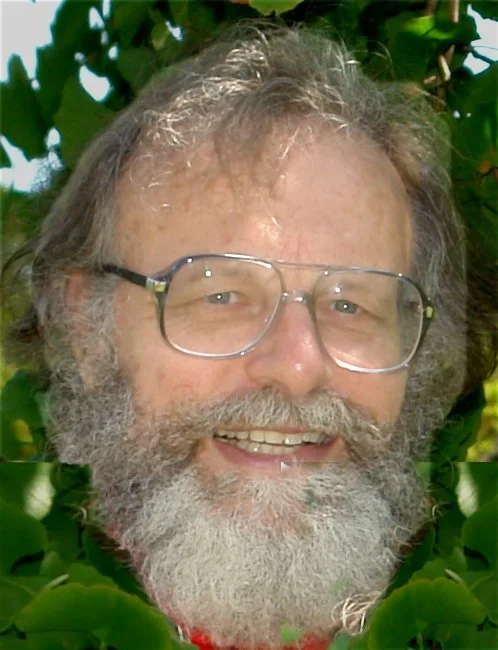
Curtis C. Morgan
“Lynn”
Lynn
When I was fifteen I had a girlfriend named Lynn. A salesman at Sears looked at her, looked at me, and said, “You really don’t know what you’ve got here, do you?”
Lynn could have been on the arm of any senior letterman of her choosing. Instead she was on mine. Chestnut hair, pageboy cut, a figure that stopped conversation. Unfailingly cheerful. At fifteen, most boys are terrified of girls. I was not. This worked in my favor more than I deserved.
For fifteen months we were inseparable. I took her to dances at her school—eight or nine a term, a school that understood the social education of its students. I bought her corsages. I dressed up. We went to Glen Echo amusement park so often the carousel became ours. Once, I walked three miles through the snow to her home to drop in unannounced because I wanted to see her, and that seemed reason enough.
I had a coin struck at a machine in Glen Echo: Curtis and Lynn are in love.
We spent hours dancing to records in her parents’ basement. Often we were the only two in the house. We danced.
Then one week, without explanation I can offer even now, I ghosted her. I simply cut off the most intense relationship of my young life without a word. My most regrettable act in eighty-three years of living. What was my reason? I didn’t have one then, and I don’t have one now. Because I was fifteen, perhaps?
We traveled in the same social circles, so the confrontation was inevitable. When it came, we were face to face. She didn’t say a word. She didn’t need to. Her face said everything.
I had no answer then. I have none now.
We continued seeing each other from time to time. She had a string of boyfriends at her school, one was a state champion in the hurdles I think. Sometimes we would double-date and drive out into the country. Sometimes we went bowling, just the two of us. She would spend the time between frames scribbling love notes to her current boyfriend on the scorecard. I could only grind my teeth.
I visited her at college occasionally—to borrow a textbook, I told myself. She had married Ben, an aspiring doctor. I would still stop by.
The marriage didn’t last long.
Eventually I moved away from Washington, and we lost all contact.
In 1992 I was on a short contract back in the city, working a few miles from the home of Lynn’s widowed mother in Potomac. I drove by. Mrs. Miller was out in the yard tending her roses.
I got out and walked up the driveway. “Mrs. Miller, do you remember me?”
She did not. Unsurprising after forty years.
“I’m Curt. Curt Morgan.”
She remembered me. Not in the nicest way. Eventually she shooed me off her property.
Sometime after that I went through a box of old things. There was the Glen Echo coin—Curtis and Lynn are in love—and a photograph of her in our backyard, showing off her legs, smiling widely, beautiful and young and entirely unaware of what I was going to do to her. I had kept them both for nearly fifty years. I threw them away. I was afraid someone would find them. Beth, for one. Or me.
~ ~ ~
Curtis C. Morgan spent forty years in IT, ran a four hundred-hive Pennsylvania honey farm, and taught at roughly sixty schools across Australia and New Zealand. In his eighties he competes as a masters track and field athlete. His essays have appeared in Mother Earth News, Responsible Statecraft, Reckon Review, Hooghly Review, Across the Margin, and elsewhere. He lives in Northern Virginia.

Toya L. Walker
“Life Lessons”
Life Lessons
Three days after my father’s funeral, while aluminum pans of macaroni still crowded the refrigerator and sympathy cards covered the coffee table, my mother walked into the backyard carrying a rusted shovel over her shoulder and started tearing up the dirt behind our duplex apartment.
When I asked her what she was doing, she leaned against the shovel and said, “Winter still coming.” She was going to plant collards.
Georgia heat pressed heavy against everything. Church women sat inside speaking softly about heaven while my mother dug silently beneath the screaming cicadas, sweat darkening the collar of Daddy’s old flannel tied around her waist.
Inside the house, my father existed everywhere and nowhere. His work boots still sat by the back door. His coffee mug remained untouched in the dish rack. Sometimes I woke before dawn convinced I heard his keys rattling against the front lock after another overnight warehouse shift. Then silence would settle over the rooms again, thick and final.
My father had loved quietly. He fixed broken cabinet hinges without being asked. Filled gas tanks before they reached empty. Cut oranges into neat slices and left them in bowls before work. Every Saturday morning, he played old blues records loud enough to shake the kitchen windows while frying catfish or pancakes depending on how much money we had that week. He worked hard enough to limp by fifty, and then one Tuesday afternoon, his heart stopped while unloading freight.
That summer after he died, every morning before sunrise, my mother tied Daddy’s flannel around her waist and stepped into the garden carrying a coffee can full of water. She planted collards, mustard greens, tomatoes, peppers, onions, and pole beans curling greedily around crooked wire cages. By July, the backyard smelled like damp soil, basil, and heat. Tomato vines sprawled wildly across wooden stakes while butterflies drifted above squash blossoms. Neighbors leaned over the fence asking how her greens grew so thick.
Every Sunday, my mother carried vegetables in the crook of her arm and cooked enough food for people who no longer came over. Greens simmered low with smoked turkey necks while onions hissed in hot grease. Cornbread crackled inside cast-iron skillets. The whole house filled with the smell of garlic, vinegar, and pepper sauce strong enough to cling to your clothes overnight.
Watching my mother cook after Daddy died felt like watching someone pray without speaking.
In my family, love rarely arrived as words. Love looked like somebody fixing your plate before their own. Love sounded like grease popping on the stove at midnight because your mother remembered you had a hard day. We did not hug often. We fed each other instead.
One August evening, after a thunderstorm knocked the power out, I found my mother kneeling in the garden after dark. Rainwater still clung to the collard leaves, shining silver beneath moonlight. Mud covered her bare knees. Her hands were buried in the soil beside the tomatoes.
At first, I thought she was praying.
Then I realized she was crying.
Not polite tears she allowed herself at the funeral. This was quieter. Exhausted. The kind that comes when nobody is watching.
I almost stayed on the porch.
My mother came from women who treated softness like danger. She wore strength like another layer of skin. But something about seeing her in Daddy’s flannel, surrounded by everything she’d forced to keep growing after death, made the distance between us suddenly feel unbearable.
I stepped into the mud beside her and started pulling weeds. Neither of us spoke. Crickets hummed through the wet dark while water dripped from garden leaves around us. Then my mother wiped her face with the back of her hand and whispered, “I don’t know who I am without him.”
The words startled me because mothers are not supposed to admit uncertainty. Mothers are supposed to know things. But grief had finally worn her down to something human.
I looked at her cracked, dirt-covered hands resting in her lap and understood something I had missed my whole life: my mother had always loved us through labor because labor was the only tenderness the world ever allowed her to trust.
Years later, I still think about that garden. About collards growing stubborn and green from exhausted ground. About my mother choosing to plant something at the exact moment death tried convincing us nothing could survive there.
Some families say I love you out loud.
Mine planted, seasoned, and served it hot at the kitchen table.
~ ~ ~
Toya L. Walker is an educator, gardener, and founder of Organically Grown Queen, where she combines gardening, storytelling, and creative expression to help people reconnect with nature and their own cultural roots. She has presented at conferences including Herbstalk and NOFA, and her work focuses on native plants, urban gardening, and using sensory observation to inspire writing and art. Through her workshops, Toya shows how even the smallest garden space can become a place for imagination, learning, and community connection.
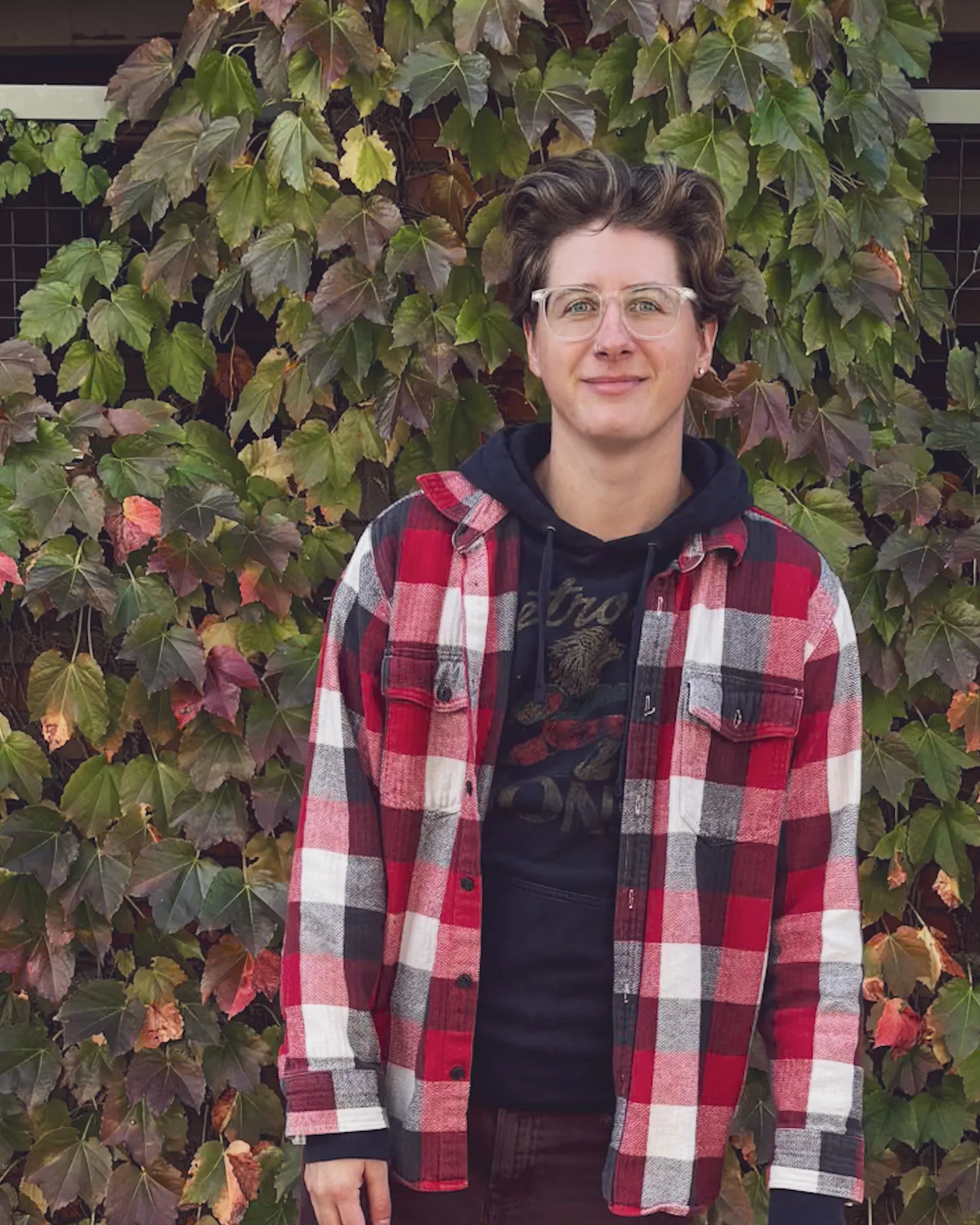
Cash Whitney
“The Comfort in Being Forgotten”
The Comfort in Being Forgotten
I noticed his dog tags first. They dangled under his white t-shirt tucked into his jeans. He exited his house, holding his hand up to grab my attention. The front door closed, revealing a white wooden cross fixed in its center. An American flag rippled to the right. He shuffled over, gait stiff, tags jingling. My body tensed, never knowing what men wanted from me in my state of in-between.
“Hi, buddy,” he said to my dog, Marlon, reaching out his brown spotted hand. Marlon moved behind my legs—nervous. I was too.
The man talked about his grass being patched, who lived in the house two doors down, and he asked where I lived and commented on how he saw Marlon and me on our neighborhood walks through his window. I nodded along, no space for my voice. In a lull, I extended my hand to him. Men always extended their hand in an introduction.
“I’m Cash,” I said.
He took my hand in his and I gripped firmly, like a man does.
“Ray,” he said, and asked, “Cash what?” His eyes moved down my body, considering me, perhaps observing my tee flat against my chest, my buzzed hair and a voice that still squeaked.
“Cash Whitney,” I replied, turning my gaze to check on Marlon in the grass behind me.
He chuckled, “Cash Whitney—that sounds made up.”
I didn’t tell him that it wasn’t entirely made up, that I had switched my first and last name, and I didn’t tell him why. Marlon pulled on the leash toward home.
. . .
Today, a couple months after our introduction, and many previous conversations had, Ray sees us as he rounds the corner of his house and shuffles our way. He wears his black hat with the word Veteran stitched onto it. Marlon darts toward Ray’s pristine two-inch cut grass and plops down, his fur fluffing from his body. His pink tongue hangs from his mouth. Ray smiles when he sees us, the lines on his face bunching. I imagine my relationship with Ray growing. I envision rolling his trash cans back to the garage after garbage day, him inviting me over for dinner. We would stand together BBQ-ing hamburgers. I would help him with house chores. He would teach me to change the oil in my car.
“Hi Ray,” I say as Marlon peers up at the older man from the grass. Ray stares at me, his eyes squinting as if he’s trying to see me clearly.
“I’m sorry,” he says, “What was your name again?”
“It’s Cash.” I smile.
. . .
A few days after our official introduction, Ray told me he had dementia and he struggled to remember new people. A week after his confession, he introduced his daughter to me as his sister.
She turned to me and whispered, “He has dementia.”
I nodded with a half-smile. “He told me.”
The fantasy of Ray’s and my relationship grew with the knowledge of his affliction. I recall a scene from the American film version of the book A Man Called Ove starring Tom Hanks. Hanks’ character, Otto, takes in one of his deceased wife’s previous students, a young man named Malcolm. Malcolm’s dad has kicked him out, embarrassed by his child’s transgender identity. Otto replies frankly, “He’s an idiot," and offers Malcolm his couch. I question whether Ray would continue to wave Marlon and me over for a chat if he knew about me. Or would our relationship change, like it did with my family who also centered crosses on their own front doors? Maybe he wouldn’t remember.
Every couple of evenings, Ray waves Marlon and me over from across the street. Marlon is less nervous and lets Ray feed him treats before claiming a patch of soft grass to lie on. Ray never remembers my name, doesn’t know who I am—or what I am. He tells me about the area of grass in his lawn that he needed to have replaced. I nod, knowing the story already. Marlon eats the green blades. Ray hasn’t offered me his couch, or invited me for dinner, but we have this. This familiar and consistent interaction. And it is enough.
~ ~ ~
Cash Whitney (he/him) is a trans artist, writer, and teacher living in Metro-Detroit with his dog, Marlon. He has an MFA in Creative Writing from Alma College. Currently, he is writing a book-length memoir while generating short personal essays. You can find him on Instagram: instagram.com/cash.m.whitney