Editor Selections for Issue 293
Poetry & Short Fiction

POETRY
Selected by Vaughn M. Watson, author of going out & being normal
“Nightingale” by Tessa Kalaule’a Chin

SHORT FICTION
Selected by Clifford Garstang, author of House of the Ancients and Other Stories
POETRY

Tessa Kalaule’a Chin
“Nightingale”
Nightingale
A pink sunset is just a pink sunset,
Stars belong to themselves,
And walls don’t have memories.
I like to read the first half.
I stop before I’m too deep:
Endings mean moving on.
I don’t want to let go,
I want to finish.
But the rest is left on my plate,
I toss it when no one is looking.
I try to forgive myself,
I pretend that forgiveness means I am healthy,
But I like attention.
To be given time and energy.
I like to be heard,
But confiding is my vice; being understood is an addiction,
When I get too high, I fall too hard―
I don’t like to talk anymore,
The more I speak, the more I long to be heard―
Then there is nothing left worthy of the draw.
So I create something.
Something to justify my shrill tone against virgin ears;
I will into existence my own decay
Until each step only drags bones in my frail skin;
Even then, I stay away until it’s too late,
From everyone I’ve ever loved, and anyone else.
I perch on their sills, and sing-song sweetly
Hoping they’ll open the door to let in the breeze.
They slam the window shut,
Calling me names I can’t understand
While I wonder if they know I’m here,
So I skip the nighttime.
Nighttime and early morning,
Then noon is gone too and I don’t know how to tell time anymore;
The sun shines somewhere, but it’s too bright for me to see,
So I pretend that I don’t skip the spaces between―
And I don’t explain the dark circles around my eyes.
I never did that with you.
That means I’m healed.
You like to talk. I listen.
I don’t like talking to you.
I’m not heard with you.
I used to be,
You don’t like to listen anymore.
You like people to hear the bird outside the window
and tell them she sleeps in your bed.
I don’t think that’s fair.
You like to feed her.
I don’t like to eat anymore.
~ ~ ~
Tessa Kalaule’a Chin was born and raised on the island of Maui, Hawai’i, and is currently a performer based in New York City. Though she studies classical music, poetry has been a constant creative outlet and passion throughout her life. She is honored to have her first publication in Prime Number Magazine.

Jeff Friedman
“My Mother’s Death”
My Mother’s Death
My mother died in her apartment at the retirement center on a sunny afternoon. Her heart gave out. Her head drooped like a purple iris petal. She died watching Judge Judy with her friend Rose from the old neighborhood. “Judge Judy tells the truth. She doesn’t let them get by with anything,” my mother said every time she watched the show. And I’m sure Rose agreed. My mother died before I had a chance to sit with her one last time as she ate cottage cheese and then chocolate truffles, died before she could pat down my hair and say to me again, “Why do you go out looking that way. Do you want to scare someone half to death?”
~ ~ ~
Jeff Friedman has published eleven collections of poetry and prose, including Broken Signals (Bamboo Dart Press, 2024), Ashes in Paradise (Madhat Press, 2023) and The Marksman (Carnegie Mellon University Press, 2020). His work has appeared in Best Microfiction 2021, 2022, 2023, 2024, 2025, and 2026, New Republic, Flash Fiction Funny, Plume, Smokelong Quarterly, Wigleaf, Rattle, Poetry, Fiction International, New England Review, Hotel Amerika, and American Poetry Review. He has received an NEA Literature Translation Fellowship and numerous other awards.

Carol Matos
“Morpheus”
Morpheus
At the door, I watch her
succumb to morphine
induced sleep as she turns
her head to me and almost
imperceptibly moves
her parched lips, throwing a
soft kiss. I watch opioid
dreams dull the unbearable,
giving her privacy from her body.
Her kiss lands on me
like gravity’s force, curves
through space and time,
leaving an invisible pull forever
within me as she wanders near.
~ ~ ~
Carol Matos’s poetry has appeared in ROOM, Columbia Journal, RHINO, Barrelhouse, The Potomac Review, and elsewhere. Her debut collection, The Hush Before the Animals Attack, was published by Main Street Rag in 2013. Her second collection, There's Something Elemental in the Way You Say Goodbye, is forthcoming from Main Street Rag in fall 2026. Formerly a photographer with exhibitions in New York City and Europe, she serves as Vice President for Administration at Manhattan School of Music.

Forrest Rapier
“Icky”
Icky
This tower is boring. I play keepaway from the needle, but my arm's a junk magnet. The vein is a streamline to my big red beater. My heart is a gift I giveaway to the faint. I lie. Like a sword on fire in the hands of a nasty angel, I always feel hot and holy. Ordinarily, I'm high. More often than not, I crash out. My name is Icarus. I do whatever I want and I don't listen to my dad. My dad's a doddard, so I’m a deadbeat. He taught me how to shave; you can’t teach a genius jack shit. All you can do is destroy their work and make them redo it. Call me Icky. This tower is boring. The old man is snoring. Lack of discipline is my daily; my day ones are my disciples. They're all slackers beneath me. A few nights ago, I tore pages out of his Labyrinth Sketchbook. I balled them up and beamed his crumpled drafts at the fireplace. I watch his work burn for fun. I am his only son.
~ ~ ~
Forrest Rapier is currently the Art Editor for Southeast Review. His debut poetry collection, As the Den Burns, was published by Texas Review Press in 2022. Recently, he served as the writer-in-residence for the Jean-Michel Basquiat: Selected Works, 1978-1988, major exhibition at The Bonnier Gallery in Miami, Florida. His illustrated chapbook, Zeitgeist Cha Cha, is forthcoming with Contagioso Press in Fall 2026.
SHORT FICTION

Patrick Dacey
“Star City”
Star City
My then wife and I were looking at a house that seemed perfectly fine except for the view of a water tower from the back deck. She said that it’d be different in the spring but I was having trouble seeing how. We had just been married and nothing felt right. She was seven months pregnant and after she said the thing about it being different in the spring, she said, “Something’s wrong.”
We rushed to the hospital and then we were in this place that had no future. When they’d finished running all the tests, the nurse said that all we could do now was wait. I imagined my son in there, afloat, waiting, too. That first night, it felt as though we were holding on to something we didn’t have. They had put blue wraps on my wife’s feet that tightened and loosened every twenty minutes to keep her blood flowing, the sound was oppressive, like Christmas music. Neither of us could sleep, and my wife couldn’t stand my pacing.
“Can you do anything other than what you’re doing?” she said.
. . .
I still smoked then and went outside and stood with the other fathers away from the hospital near a tunnel where the Norfolk-Southern used to pass through. The yard was deserted now, littered with tipped over canisters, trash, and train parts. It was cold, early November, and we huddled together, smoking cigarettes and kicking our heels, wondering if our babies were going to live or die.
“This is breakdown city,” one of the fathers said. He had a tattoo above his eyelid, two hearts connected by a rainbow. He said he was coming all the way from Kentucky. When he squinted in the icy sun, the tattoo just looked like a scar.
The other fathers were from Virginia. One from a town I can’t remember. His hair was thin and wet and there were three or four cysts on the back of his neck. The other was from a town called Galax. He had a lisp and talked with his palms facing up.
The one from Kentucky kept saying he was thinking of making a run for it.
“I’m in what you call a lose-lose situation,” he said and pumped air into his fists.
There was too much pain in our hearts to smile. We were scared.
I looked back behind the hospital at a big neon star fixed on a mountain there. The light shone all the way towards downtown.
“Star city,” the guy from Galax said.
“What’s that?”
“They call this place star city, because of the star.”
The guy from Kentucky had a pint bottle of rum with him and he offered it to the guy from Galax who was drinking coffee. He lifted the lid and the guy from Kentucky said, “Hold steady,” and the guy from Galax said, “You hold steady, Bub.”
We were all out there holding steady, filling the sky with hot air and smoke, when the fog started to lift and the steel girders glistened in the pink light of sunrise. There, on the overpass was a fawn, slipping and staggering across the icy asphalt.
“Where’s his mama?” the guy with the cysts on his neck said.
“He’s hurt,” the guy from Kentucky said. “His mama already gave up on him.”
We let that sink in and stood there like other deer and watched the fawn limp down the overpass and out of sight.
. . .
Most nights, buzzing from caffeine and worry, I paced the cubic, brightly lit hallways, where the midnight shift orderlies shuffled by like ancients, carrying large, netted sacks of pain on their shoulders. Stays here were short, faces changed quickly. In some rooms they held hands and in others they prayed and in others they yelled and cursed.
One night, I heard the faint sound of a woman singing and followed the sound to an open door near the end of the hall.
“I like your voice,” I said.
“They say it soothes the baby,” the woman said.
You could see the star from the window and feel the current of the thing itself.
“You have a view,” I said.
“Gets hard to sleep at night, even with the blinds closed. Have you seen anyone around here with a rainbow tattooed above his eye?”
“I’ve seen him,” I said.
“He was supposed to bring me an eye mask but never did.”
I said I’d remind him if we ran into each other and then said good night. I drifted out into the hallway. The walls didn’t seem real. I kept losing sight of what was in front of me. My knees gave out and I collapsed on the floor.
Moments later I was helped up by one of the orderlies and a nurse.
“It’s not uncommon,” the nurse said. “You’re in the right place.”
When I went back to the room, my wife asked if I could turn off the TV. She was pale and sweating, and I held a damp cloth to her forehead. I wanted to say it was going to be okay, but it felt senseless. I was in awe how she was able to lie there and keep still. I was in awe of her patience.
. . .
The next morning our baby stopped moving. Suddenly, there was no time to wait. My wife was rushed into surgery. They put up a blue sheet so that I could see the doctor’s faces but not what was happening. They told me to try and keep my wife still. I held down her shoulders and they pulled. They said they had to break his arm and then broke his arm. He let out the tiniest cry before the nurses wrapped him in plastic and wheeled him away. My wife was taken to another operating room and for a while I stood there not knowing where to go before realizing that no one was coming to tell me.
Our hospital room had already been cleaned and sanitized, and our things placed in plastic bags and brought down to the recovery room where my wife would stay for the next few days. We were given vouchers for the Ronald McDonald House, an old Tudor mansion, a few blocks from the hospital. I shuffled through the slush and cold like a transient in my unwashed jeans, down the narrow sidewalks split open by hundred-year-old roots. An old lady wearing a cross so big it seemed to bow her head gave me a key and a breast pump machine that had a loose wheel and rattled like an old shopping cart.
The room had two queen-sized beds separated by a nightstand, an old television, and an oscillating fan. Our nightstand had three bibles in the drawer, a first aid kit, and a pamphlet titled, “How Are You Really Feeling?” with a photograph of a disconsolate-looking mother on the front, staring off into stark futures. There weren’t any windows. When my wife was released from the hospital, I helped her to the room and she looked at the pale-yellow walls and maroon drapes, and said, “This is a nightmare.”
For the next three weeks, we went back and forth between the hospital and the Ronald McDonald House. In the NICU, we sat in comfortable chairs around the incubator. We couldn’t hold him yet or else risk him falling apart, so we set small patches of clothing on his skin so that he’d know what we smelled like. We didn’t know how to say goodbye. We just kind of drifted away.
Part of staying at the Ronald McDonald House meant the fathers had to chip in. The lady with the big cross gave us empty coffee cans and plastic grabbers and we went around the courtyard picking up trash and cigarette butts. The guy from Galax already had a room at the house, and he told me about the guy with the cysts on his neck losing his daughter. The guy from Kentucky checked in a few days after me with the woman I’d talked to before. She followed him around like a shadow. They smoked cigarettes by a pear tree. He was clear-eyed with pride, and I thought that maybe this place of sadness and loose hope had inspired some small change in him.
One day, a nurse handed us all plastic dolls and taught us how to give CPR. The dolls were bigger than our actual babies. Each of us had to demonstrate that we understood how to do it correctly. I was too soft with my doll, the nurse said. “You shouldn’t be scared to apply some force,” she said. The guy from Galax thumped his doll so hard it broke in half. He looked up and his big eyes started to well.
Another day, someone from a church came by and dropped off a taped and battered box filled with baby hats, socks, and packs of off-brand diapers. The guy from Kentucky sifted through it, complaining about how church people donated the cheapest shit but had the most money. He was trying to separate the gloves from the little piece of plastic, but his hands were shaking. Finally, he tossed them across the table.
“I can’t be stuck inside like this,” he said.
We walked to the corner store and bought cigarettes and a lighter and stood on the other side of the store where the wall gave us a buffer from the wind. I could see the star in full view. I thought that it was too obvious, too on the nose, really, this star, overlooking our sorry, pleading husks. It was too much for the universe to bear.
The guy from Kentucky laughed and said, “I didn’t know my Pops. I never wanted to know him. You know what I’m saying?”
He looked at me and I was looking at the star and I knew what he was saying.
The next morning, when we were out cleaning up the patio, he took his coffee can and plastic grabber and never came back.
. . .
On our last night at the Ronald McDonald House, I went downstairs into the dining hall and sat there just outside of the moonlight coming in. Everything was stilled by quiet and shadows. I can’t remember what I was thinking, but I remember that I sat there without anticipation or purpose. I sat there because it was a place to sit and the room was cool and the sky was changing and at some point, the light from the star turned off, and it was morning and we were taking our son home.
My hands trembled as I gave the parking attendant my slip. Or maybe everything else did. Frost shimmered on the roadway. What I feared most was leaving this place I never thought I’d end up in, and the freedom that came with desperation and pain.
I started to pull out of the garage when a deer bolted in front of the car and bounded up the overpass. I stayed there for a while with the engine idling and my heart racing.
“Did you see that?” I said, looking at my wife in the rearview mirror, looking at our son, facing towards her in the backseat.
“See what?” she said.
~ ~ ~
Patrick Dacey is the author of the novel The Outer Cape and the story collection We've Already Gone This Far, published by Henry Holt and Company. He holds an MFA from Syracuse University, and his work has been featured on NPR’s Selected Shorts, and in The Paris Review, Zoetrope All-Story, Guernica, AGNI, Salmagundi, and The Kenyon Review, among other publications. He is a recipient of the Pushcart Prize for Fiction.

Susan Josephs
Rabbi #5
Rabbi #5
I really thought that was it, back in 2017, when Rabbi #5 contacted me on Facebook to inform me of his engagement. Historically, he had always reached out after experiencing some sort of romantic demise with casual “What are you up to these days?” messages that signaled a latent curiosity designed to flatter the person he still apparently thought I was. Or he would occasionally craft more overt and wistful statements such as: “I always wished we had met about fifteen years later than when we had.” That he wanted me of all people to be aware of his impending nuptials seemed like something new, even though it also reminded me of how my cat liked to ceremoniously deposit dead mice at my feet so I could be proud of his killer instincts.
Back in 2017, I chose to tell myself that Rabbi #5 might have become a person capable of evolution and this was his way of letting me know. Consequently, I had simply written back a perfunctory “Mazal Tov” and googled combinations of the rabbi’s name with “wife,” “engagement,” and “marriage” until I found her. She was girl-next-door pretty, with long dark hair, wide blue eyes, clear skin that appeared untouched by cosmetics, and a smile that radiated sweetness and approachability. Better her than me.
But now it’s 2025 and the world is collapsing, at least for some of us. I should not have been shocked by the message request on Instagram several weeks after Los Angeles stopped burning and my watery eyes and fierce headaches from the smoky air finally subsided. Historically, this also computed: Rabbi #5 had a penchant for reaching out in the aftermath of select natural and human disasters (Remember how he milked 9/11?!?) and always preferred to out-of-the-blue contact me on the most au courant social media platform possible, i.e. wherever I had finally capitulated to setting up a profile. In 2025, this meant Instagram, but at least this time, he hadn’t bothered to try and follow me.
Since the dawn of social media, I had allowed all sorts of questionable people into my networks but never Rabbi #5. This was a rule analogous to someone desperate to cut sugar from their life but only banning the most dangerous ice cream flavor or candy bar.
Hi there! Long time no speak. Hope you weren’t anywhere near the fires. I think you’re still in LA? I’m going to be there for a conference next week. We never did have that in-person conversation.
Immediately, I search online, my key words the rabbi’s name and “divorce.” But the results mostly conjure up my last Google search, conducted about two years ago during a post-pandemic phase of rumination over some of the more confounding examples of Men I Used to Know.
Respected congregational rabbi. A member of various community social justice groups where he’s the rabbinic representative. (I expel a guffaw stored from the last time I clicked on the link listing his name on a committee of experts dedicated to domestic violence prevention.) Reasonably successful author of three books on contemporary Jewish thought and practice. A 3.5 average on Goodreads where reviewers praise his “approachable style” and “thought-provoking” applications of Talmudic discourse to contemporary Jewish life. A 4.0 on Rate my Professor for an adjunct position at a public university, where students love that “you can just shoot the shit with him after class, and you can just tell he’d be so fun to have a beer with at a dive bar!”
I never saw Rabbi #5 drink a beer. Whenever we met at a dive bar, he always ordered a whiskey neat, never on the rocks. I generally drank vodka cocktails back then, which I found most conducive for our discussions on existential ennui and why he wasn’t like most other rabbis or womanizers. (Examples include: “It’s not that I actually enjoy power and attention.” Or: “I can see myself perfectly happy as a medieval monk, holed up in a tiny room with only my manuscripts to keep me company.”) These boozy, agenda driven tete-a-tetes inevitably served as Pavlovian prompts for me to forgive him one final time and grant him one final chance to “make it up” to me.
I read his message again, re-read an exchange on Messenger from 2016 when he and I both expressed a desire to have an in-person conversation under the auspices of finishing our unfinished business, and note the absence of those fluttery, jittery sensations that would flood my stomach in response to his communications. No longer do I succumb to the intermittent fantasies of my 30’s and early 40’s when I imagined meeting him at some upscale hotel bar as some older, wiser woman but still looking hot for my age. In those fantasies, I enjoyed picturing myself with frizz-free hair and decked out in the perfect black or purple slightly-above-the-knee sundress with sexy, crisscrossing back straps. He would be shocked, perhaps dazzled by my appearance, though he wouldn’t say so because that was not his style. We would then exchange pleasantries for several minutes before he apologized (What did I want him to apologize for exactly? For being himself?) and how it was one of his biggest regrets, us failing to find a way forward.
I know I’m going to write him back, but I take a moment to savor my lack of urgency. After all, I am no longer the woman who used to respond to Rabbi #5’s communications with a racing heart and flushed face, her id and ego a tangled knot of impulsivity. That woman used to be twenty-seven years old, waiting for the rabbi to phone her at midnight and pretend it wasn’t a booty call so that she would risk a sketchy subway ride from the Upper West Side of Manhattan to a not-quite-gentrified Brooklyn neighborhood because that’s what you do for the people you love, or rather, worship. I can remember sitting in mostly empty subway cars with skin hot to the touch, still halfway alert to potential urban dangers but mostly consumed with desire to know and be known by this so-called man of God.
Today, when I read stories about one human being exerting that much power over another, I’m sometimes like all the other smug and detached people who think nothing of shaking their heads in judgy bewilderment and asking: How could she allow that to happen to her? But sometimes, I can remember how I felt sitting on the subway in the middle of the night, simultaneously flooded with an urgency that squelched all the other impulses and instincts and a burning fury towards a world that refused to understand. I am grateful not to be that woman anymore, but I also remain connected, as if she’s some sort of phantom limb.
I want to better understand her, that woman who tried to defy the definition of insanity in the time-honored tradition of any devoted addict. At least, that’s what I tell myself right before writing back Rabbi #5.
. . .
Three days later: I meet my friend Miriam for brunch at a French-style café for one of our mid-life venting sessions. Specifically, Miriam had wanted to pick my brain about how to speak to her aging parents regarding their wherewithal to keep living in their own home without assistance and we both wanted to bitch about the decline in quality paid writing opportunities. Miriam and I had met as twenty-something journalists in New York and we both had relocated to Los Angeles around the same time. Several years ago, we further bonded over caving to economic necessities and diversifying into grant writing, university alumni magazine profiles, and digital marketing copy. Now, all we seem to do is talk about if we’re too old to go to grad school for something else and how AI will take over everything anyway, including about ninety percent of our brains.
But Miriam also happens to be my only current friend who witnessed the entirety of my stint as a serial dater of Jewish clergy and so I cannot help but mention the resurfacing of Rabbi #5.
“No way! So creepy!” Miriam tends to speak in exclamation points when buzzed on two or more lattes.
“Yeah. But I’m not going to lie. I’m like…still twenty percent curious.”
I pause, not quite ready to tell Miriam that I’m meeting Rabbi #5 for a drink next Sunday afternoon.
“Seriously?” Miriam scrunches up her face as if assaulted by an intolerable scent.
“I don’t know. Maybe fifteen percent? Whatever. I’m curious. Wouldn’t you be?”
“As a writer or a person?”
“Hah, hah,” I say. “What’s the difference?”
Miriam crunches on butter-slathered toast and persists. “Did you tell Mark?”
I nod. “You know I tell Mark everything.”
Miriam does not tell her husband everything and so she always wants to know how my husband reacts to blasts from the past.
“He doesn’t care. If anything, he’s amused.” I then confess to Miriam that I did more than simply respond to Rabbi’s #5’s Instagram message.
Miriam sighs and shakes her head. “How are you not over this?”
“That’s not what this is. And this time, he’s actually in LA.”
“Right. Didn’t he get in touch once and ask if you’d drive to San Diego because he was at a conference there?”
“And I told him to fuck off.”
That wasn’t exactly true. I had deliberated driving to San Diego, but I was forty-one years old at the time, and able to locate an effective deterrent for jumping into my car: a memory of my younger self getting off the subway in his Brooklyn neighborhood to visit him sometime past midnight and being followed by a man who wouldn’t stop muttering all the obscene names for a woman out at that hour. Bitch. Slut. Cunt. Even after that incident, I never asked Rabbi #5 for subway station accompaniment and he never offered.
“You know,” Miriam cocks her head at me, bird-like. “I’m not sure I ever actually straight-up asked you but remind me…what was the deal with you and rabbis?”
I emit a short, sharp chuckle. “It’s complicated…I’m sure it’s part the Orthodox thing but also…other stuff.”
“True,” says Miriam. “Not every ex-Orthodox person develops a thing for Conservative and Reform rabbis.”
“Don’t forget the ex-Chabad rabbi.”
Miriam laughs. “Talk about having a type.”
Briefly, I scan my mind for images of Rabbis #1-4 and fail to find a unifying sound bite or though line that would satisfy my friend from the good old days. Miriam had frequently contributed to my experiments in living once I stopped identifying as an Orthodox Jew. She and I used to go out to bars and clubs on Friday nights, and she would attempt to ameliorate my anxiety and shame of walking down Broadway on the Upper West Side wearing jeans and a tank top and praying that no one from my Sabbath-observing, synagogue-going days would spot me darting down the steps to the subway.
“I don’t know…something about them being men of God…maybe it served as some kind of spiritual, religious substitute for me. You know…to stay connected when I felt so disconnected? I don’t know…because wouldn’t I have just debased myself with the usual actors and politician types?”
“You mean like I did?”
We nod, flash each other knowing grins, and take sips of our lattes. Miriam survived a first marriage to a city council person and her second husband used to be an actor. It’s not the only reason why we’re friends but still.
A waiter arrives to clear our plates while I launch into a curated series of reminiscences. How I lost my virginity to Rabbi #1, who sold me on his promise that he was excellent at “brief, intense affairs,” recited a Shehecheyanu over my altered hymen, and reminded me two months later that in no way did he engage in false advertising about monogamy. How the ex-Chabadnik Rabbi #2 abandoned the rabbinate, began studying Buddhism, and relocated to Dharamsala to be closer to the Dalai Lama. How I gave Rabbi #3 a second chance after sitting next to him at an acquaintance’s Shabbat dinner table some five years after our titillating-for-him, humiliating-for-me summer working together at a Jewish day camp. (The future Rabbi #3 had volunteered to initiate me in the art of a proper blow job but then performed the pre-social media equivalent of a one-star review by complaining to co-workers about my excessively toothy naivete.) How I wanted to be in love with Rabbi #4 because he seemed so much nicer and humbler than the other rabbis of my carnal acquaintance, but alas, kissing him made me cry in the despairing, what’s-wrong-with-me kind of way.
“And then you fell right into the arms of Rabbi #5. A classic case of not quite hitting bottom,” says Miriam.
“He made a surprising first impression.” I tell Miriam a story she most likely heard years before, about how I had heard rumors about this roguish young rabbi before meeting him at a friend’s party, and how he had initially presented as quiet and scholarly. We had talked about favorite books and films and our respective Jewish upbringings that night and I can remember how his deep voice and muscular build quick-sketched for me a portrait of a brooding intellectual jock whose relationship with religion nonetheless seemed healthy and aspirational. I had written my phone number on his wrist tattoo-like, and we had mock-shuddered at the dark symbolism of it all. He called me the next day and invited me for after-work drinks at a midtown dive bar.
“I used to worry about you taking the subway at three in the morning to meet him,” says Miriam. “That part, I remember.”
“I was just thinking about how I used to do that.”
“All those lose yourself in the moment things we used to do for them.”
“Yeah. And we would tell ourselves how that made us feel so alive.”
Miriam shakes her head. I wait for her to say something like “live and learn” but she doesn’t.
The waiter drops off the check at the table and I offer to pay for all the self-centered reminiscing.
“I’m not going to do anything stupid,” I promise.
“You can still back out.”
But we both know I won’t.
. . .
Rabbi #5 offers to meet me in my own neighborhood. This at first feels like a pleasant surprise and potentially redemptive gesture, until he divulges an interest in visiting the Venice Canals after seeing so many viral photos of the watery and architecturally picturesque locale on Instagram. At any rate, I choose a newly renovated hotel rooftop bar about five minutes from my house.
I get there ten minutes early, since that affords me the illusion of control. It’s too cold to wear a sexy sundress and so I am wearing my best black jeans and a sparkly purple, form-fitting but not overly tight T-shirt. I had taken great care to rub root concealer over every strand of gray hair and apply two coats of waterproof mascara. The mascara, however, is overkill because I am wearing sunglasses that might stay on for the entire reunion should I sense any sort of danger or regression from engaging in unfiltered eye contact with Rabbi #5.
I had spent the past two days doing exactly what I swore not to do: agonize over my middle-aged appearance. What exactly was I trying to prove with this face-to-face Rabbi #5 encounter after a hiatus of over two decades? After all the ego eradication that has happened since hitting my late 40’s, adjusting to the pros and cons of female, middle-aged invisibility, and deciding to defy the norms of disappearing every last sign of aging from my face, why did I still care about how Rabbi #5 might perceive me? Fine, so you can’t dazzle him anymore with your young woman hotness. But you can show him how you’ve evolved. You can sip your martini and smile at him with your non-Botoxed, filler-free face in a way that conveys a hard-won inscrutability and been-there-done-that detachment and when you start comparing memories, you will neither demand an apology nor slide back into his universe. And when he asks to stay in touch, you will gaze at him with all the serenity you can muster and simply wish him “all the best.”
The hostess parades me past couples and groups of people in their twenties projecting beach casual glamour with their unseasonable short shorts, tank tops, and mini-skirts, smooth, shiny yet sun-kissed faces, and gym-hard bodies. I am seated on a bright pink couch with panoramic views of ocean, palm trees, and the kinetic mingling of tourists, vendors, and street performers on the Venice boardwalk. I immediately order a white wine, determined not to be a slave to my vodka-tinged memories. I wait for the wine and burrow into my phone. Those fluttery, jittery sensations have returned to take up residence in my stomach and I cannot take comfort in the deep blue of the Pacific Ocean in front of me. Instead, I do what I despise: scan social media feeds for self-help bromides and question a decision I had so casually defended to Miriam and my husband.
He's eighteen minutes late and I recognize him immediately, this man conferring with the hostess. He’s almost sixty now with completely white hair but has the same husky yet athletic build that I remember. I stand and wave. As he walks towards me, I register the passage of time through his glasses, creased forehead, and the quality of his gait; less swagger and more caution.
“Wow,” he says. “You’ve barely changed.”
I give him a stiff and formal hug. “That’s kind but also not true.”
We sit side by side on the bright pink couch, with enough distance between us so that no body parts surreptitiously brush up against each other. He orders a beer and says, “I can’t drink the way I used to.”
“Neither can I.”
His speaking manner mirrors my hug. I feel like he’s conducting a job interview as he asks me “what I’ve been up to” in the last twenty years and can I summarize the themes? I tell him I stuck it out as a writer, despite the ongoing impending death of journalism in particular and literacy in general but that I’m burnt out on the hustle of it all and contemplate returning to school for some mid-life master’s degree conducive to a helping profession. He tells me things I mostly already know; that he relocated for a synagogue job in Seattle almost ten years ago and currently presides over a congregation of about three hundred families. He’s working on a new book about the potential ramifications of AI on Jewish education and has been married for seven years.
“Seven years,” I parrot back. “How’s that going?”
“It was amazing, at first. But lately, things have been…tough.”
I can feel my face soften with sympathy. He’s still in there, the wounded boy that I alone could heal. “I’m sorry,” I say.
He nods and pretends to change the subject. “You’re married, right?”
I nod. “For about fifteen years.”
“Wow.”
“Wow what?”
“I don’t know…I guess I never pictured you as the marrying type.”
“Right, I was going to be your de Beauvoir to your Sartre.”
He understands the reference but does not necessarily possess the corresponding memory as he appraises me, still wearing my sunglasses. “You never had kids, right?”
“That’s right.”
“Me neither.”
I nod.
“That’s a whole other conversation, huh?”
I shrug. “It was a complex decision, but my husband and I have no regrets.”
Did Rabbi #5 flinch at the word “husband?” “It’s really good to see you,” he says. “Something about this feels…so familiar…in a good way.”
Familiar. Now there’s a word. “What do you remember exactly, about us?”
He produces a lopsided smile. “That’s a good question.”
“I’m curious. What comes to mind?”
“You had a lot of ambition. And you had this aura of sadness that was…compelling.”
“That’s me. I was asking about us.” I flash to a memory of the day I spent hours in preparation for his inaugural visit to my Upper West Side studio apartment, how I scrubbed the floor, re-arranged the little furniture I had into what I believed to be more aesthetically appealing configurations, and splurged on European cheeses and other treats from Zabar’s. And when he walked into my tiny foyer and surveyed the trappings of my one room living, he simply said, “Wow, I had no idea you were this impoverished.”
In my mind, that was the same day when we had another episode of failed sex and the condom broke and he sailed out of my apartment with nary an apology or expression of empathy, not to mention any offer to split the cost of the morning after pill.
He stares at me and the way his head tilts up and down reminds me of our first date at that midtown dive bar and how the years of fluttery, jittery sensations I unfailingly had in relation to him had originated with his head-to-toe appraisal of my body as I seated myself on an aging, cracked barstool.
“Would you mind taking off your sunglasses? It’d be nice to connect more face to face.”
I do not like his request for more than one reason and yet I comply. I stare at him with unprotected eyes and consider what exactly do I have left to hide.
“I guess I’ve been curious all these years, to know if we remember the same things.”
“You used to tell me exactly how and when I pissed you off. I respected that.” He exhales a chuckle that reads as self-deprecating.
“Yeah, I did. And then I would forgive you.”
He responds with sustained direct eye contact, a maneuver that a San Francisco-based friend of mine likes to call “the Bay Area Gaze,” common among heterosexual men in that geographic region who have either attended Burning Man or participated in some form of experiential group therapy.
“Do you remember why you so frequently pissed me off?”
He shakes his head. “Not the specifics. But I remember you being very patient with me.”
“Yeah, well…I remember the specifics.”
We sip our drinks, and I am lightheaded from remembering the era when I swore off the booty calls with the diminishing sexual returns and he agreed to try dating me instead. We would have these marathon excursions involving hours at a museum or walks in a park that left me fantasizing about our wedding and future life together as a Jewish power couple, where I would reinvent the role of rebbetzin to suit my feminist writerly aspirations. Such fantasies inevitably dissolved into my not hearing from him for weeks, and then he would resurface with a plea for just one more date, which always ended with his refusal of sexual contact under the auspices that he was ready to get to know me better as a person. I didn’t solve the mystery of his shifting sexual preferences and cyclical disappearances until one serendipitous night at an East Village bar, when I spotted Rabbi #5 ensconced in a booth with his hand on the thigh of a mini-skirted woman who looked fresh out of college. I can remember my anger at this discovery but also my compassion, i.e. of course Rabbi #5 would do his best to conceal his Madonna/whore complex because just think of the optics!
Rabbi #5 smiles and says, “I guess I have a poor memory. But I’m so glad you agreed to see me. I’ve never stopped thinking of you, wondering…what if.”
He tells me that he married a woman who doesn’t get him in the way he remembers how it felt to be with me. “She’s loving and kind, but with you…it was a different kind of connection, I guess, maybe one I wasn’t ready for at the time but…”
I drain my wine. “I was in a dark place back then, isn’t that what you connected with?”
He cocks his head and appraises me in that Pavlovian head-to-toe way.
“I’m in a different place now.”
“What does that mean?”
“For one thing, if I were single, I definitely wouldn’t be dating rabbis.”
He laughs, orders another beer, and asks about my husband. I order another wine and tell him that I too married someone kind and loving, only in my case, I feel completely seen by this person. I tell him that my husband does not believe in organized religion and that I prefer it that way, to be the person with the stronger Jewish identity.
“So…you’re happy?”
“All things considered, yes.”
He performs another “Bay Area Gaze.” He asks, “Then why are you here?”
I exhale a nervous chuckle and shrug. “Good question. I guess I’m just curious.”
“So am I.” He sustains the eye contact.
I take a deep breath and tell myself that my now or never moment has arrived. “I’m here not because of what if. It’s more like…why.”
“Why?”
“Why did I give you so many chances? What was up with my self-worth back then?”
“Was I that bad?”
“You tell me.”
We marinate in about a minute of awkward silence, before he takes a hefty gulp of his second beer. “You must get a lot of sun, living in Los Angeles.”
I shrug. “Sometimes.”
“I can see how the sun has aged you. But there’s treatments for that, right?”
I am lightheaded again and mute with shame. Why didn’t you stay hidden behind your sunglasses?
“My wife’s about your age and she looks amazing. It’s so important to take care of our skin as we get older, isn’t it?”
And there he is, the man you definitely used to know.
I am about to overexplain that I take excellent care of my skin despite its botulism-free and otherwise non-enhanced appearance, but the waitress interrupts to ask if we want another round.
“Just the check,” I say.
The waitress nods and I put my sunglasses back on. While I despise myself for not having the perfect comeback, I take comfort in the waitress having prevented me from defending why I look the way I do.
“I still have some time,” says Rabbi #5.
“I don’t.”
“Oh, that’s too bad. I thought you were going to show me the Venice Canals.”
I shrug.
“We didn’t even talk about Israel and Gaza.”
“What is there to say that hasn’t already been said?”
“Well, maybe you can tell me a little more about what it’s like to live in LA.”
“There’s not much to tell.”
I wonder if I had suppressed memories of this pattern, the way he would go for the jugular and then pretend that nothing ever happened. But I can only remember all those sexy outfits I used to wear on our dates. Other than his head-to-toe appraisals, he never once complimented me on my appearance. At the time, I believed that his inability to compliment marked him as more authentic and reliable than the verbally expressive types who seemed to value speech over action.
The waitress arrives to settle our check and Rabbi #5 tells her that we’re splitting it. This makes me laugh and Rabbi #5 asks, “Did I do something wrong?”
I pay for my drinks and wait for the waitress to leave before I say, “Déjà-fucking vu.”
Rabbi #5 stares at me with what appears to be sincere confusion.
“This was a mistake.”
I stand up and start walking towards the elevator.
“What happened?” He catches up to me and grabs my hand, and I remember how we used to wrestle on his bed to mitigate our respective sexual frustrations. Once, he pinned me down and said, “I could break your wrist…if I wanted to.”
I stare at this man and remind myself that I eventually stopped taking his calls, not so much because of my indignation over how he treated me, but rather, the looping repetition of his particular shtick finally began to bore me. I had told myself that I deserved better than that, not understanding the half of it.
Now, I wish I could tell Rabbi #5 to have a nice life with his wife and her amazing skin. But all I say is, “Please let go of me.”
He searches my face for clues, but I give him nothing. He lets go of my hand. “I don’t understand,” he says.
I shrug. “Do you want to take the elevator first or should I?”
He tries to make eye contact as the elevator door closes on him, but I am wearing my sunglasses. Finally, I am the inscrutable woman of my current fantasies, but what are fantasies anyway?
. . .
Mark is watching TV in the living room when I get home and doesn’t bother pausing his show when he asks, “How was it?”
“Regrettable.” But I’m not sure if that’s completely true.
My husband pauses his show, some new medical drama that’s trending on Netflix. “Was he still a hot, bad man?”
“Hah. He’s old like the rest of us now. But yes, I mean, sort of.”
“How so?”
“He basically told me I looked old and that it’s my fault, since I don’t do any Botox, etc.”
“He really said that?”
“Not exactly but that was the gist.”
Mark shakes his head and exhales a low whistle.
I sink down next to my husband on our living room couch and put my face close to his. “Am I that horrifying?”
“You’re being ridiculous.”
“I can’t help that right now.”
“Why did you want to see him anyway, knowing who he is?”
“Sometimes, people are capable of change.”
Mark smirks. “Sure they are.”
“I don’t know, I guess I was just curious. I’m always curious.”
“Curious about what?”
I shake my head. “I know it’s a cop out word.”
“So don’t cop out.
“I don’t know, I have to think about it.” I am suddenly reminded of all the times I have used the word “interesting” to describe a piece of art or some experience that I couldn’t decide whether to love or hate.
“Did you still find him attractive?”
“Maybe a little, at first. But after he said that to me? Gross.”
Mark appraises my face. He’s never been the complimenting type either but unlike Rabbi #5, his actions always spoke so much louder than his words. “That’s good,” he finally says. “I guess some people are capable of change.”
“I feel really old.”
“You know I hate the plastic look.”
I stare at my husband and shrug. We both know I need more than that.
Mark sighs. “He was an asshole for saying that to you. And you look great…for your age.”
“Hah. So do you.”
We laugh and Mark asks if he can have a few more minutes to finish watching the medical drama. He suggests I research feel-good comedies and find something we can watch together. I agree that I need a distraction, but we also both know how long it takes me to decompress from experiences I desperately wish I could change.
While Mark finishes his show, I google “top comedies on Netflix,” but my mind races with words I did not say to Rabbi #5. After several minutes, I stop the googling, close my eyes, and ask myself whether I can make peace with her, my younger self, the one who forgave this man in a never-ending cycle because she yearned for an impossible outcome. What did that do for me anyway, all those years of indulging a desire to heal whatever it was I saw in him that somehow reminded me of my own wounds?
~ ~ ~
Susan Josephs is a Los Angeles-based writer, psychotherapist, and author of the debut novel Accidental Friends (Bedazzled Ink, 2025). Her prose has appeared in over a dozen publications including Los Angeles Times, Salon, Forward, and LA Weekly, and she’s the author of five plays that have received either full productions or staged readings in New York and Los Angeles.
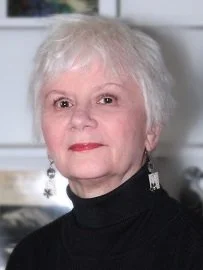
Patricia Schultheis
“All We Know About the Universe”
All We Know About the Universe
On her Manhattan terrace 20 floors above East 56th Street, Kathryn Allister rests on a weatherbeaten chaise lounge. It’s late afternoon, the third Sunday of August, and the city is quiet. People are at their second homes. Kathryn and James never really wanted a second home—once you have one you feel you have to go there every weekend, whether you want to or not. Rather, every year, they rented the same ramshackle bungalow on a quiet cove on Long Island’s North Shore.
But this year they haven’t even done that: One, their daughter Jessica’s in Spain for an independent study on the intersectionality of Islamic and Christian art; Two, Kathryn’s brain tumor. She had surgery in late March, and, while her prognosis is good, she and James still don’t want to be too far from her doctors.
An old sweater of his drapes Kathryn’s shoulders, and in the unseasonably cool air, she feels enveloped by lassitude. She closes her eyes and lets The New York Times flutter at her feet—nothing in the paper is really that important, anyway.
A Midwesterner, Kathryn sometimes thinks the overwrought way their New York friends regard the paper as a waste of energy. Things happen. You can’t do anything about them. Meanwhile, all around you, other things are happening, maybe less politically consequential things, but still interesting.
She grew up the middle child and only girl of an English teacher and mildly alcoholic, but successful, Cleveland attorney. Each in their own way, her parents found an almost spiritual refuge in nature. Her father’s embrace was wide and grounded in science. Kathryn remembers him waking her and her brothers up so they could see lights shining from Lake Erie’s far shore. “See those? They’re in Canada. Usually we can’t see Canada from Cleveland...it’s too far away. But sometimes the air’s density changes, it’s called a super refraction, and when that happens, we can see a whole other country across the lake.”
Her mother’s connection was more personal: religiously she cataloged the species that visited their five backyard feeders. On camping trips along the lake’s shore, she’d point out various ducks. “See that one? It’s a bufflehead. Isn’t that a funny name?... bufflehead. Just saying it makes you want to laugh.”
The restrictions of the co-op where Kathryn and James live regulate everything from tipping the staff to pet waste, but somehow, they don’t address birdfeeders, so for years Kathryn has kept three filled—they remind her of home. When she was ill, she’d lie in the family room and watch their son Matthew fill them. He was so diligent—as if he kept the titmice returning, his mother would always be there, too.
She hears him now, at the kitchen island with James. They’re preparing baked ziti. For the sake of the woman they both love, they keep their conversation skating over a surface of sauce and mozzarella.
A chorus of sparrows peeps behind Kathryn and suddenly erupts into a burst of twittered alarm and flustered flight. She opens her eyes and turns toward the feeder: not one sparrow remains. Instead, the feeder sways under the weight of a single starling. The late afternoon light intensifies its iridescence and magnifies its presence. It regards Kathryn with cool detachment, and she remembers reading in one of her mother’s bird books that starlings are associated with Bridget, the mythological Irish goddess of healing.
And then, the bird’s eye changes from black to white, transmuting into a wide, benign light that spreads until its beckoning brightness engulfs everything around it. Every fiber of Kathryn’s being tell her to go to that spreading incandescence. So she does.
She reaches it. Enters it. And passes through it.
. . .
And emerges in Vermont. A Sunday in August, 1878. She is in a rocking chair on the back porch of a humble home outside Burlington. Her name is Anna, and she’s wrapped in the shawl she’d knitted three winters before.
Her husband Everett is splitting wood—he’s such a careful provider and always makes certain they have enough wood to survive Vermont’s long, brutal winters. He works like a demon, raising his axe, slamming it down, pieces of firewood scattering at his feet. When there are enough, to avoid tripping, he allows himself a single swipe across his sweaty brow, then stoops, picks up as much of the split wood as he can hold and stacks it against the barn. He never looks at Anna, a silent rebuke, primarily at their son William, and secondarily at her—she should have stopped their boy from going to church that morning.
Ordinarily, in order so Everett doesn’t have to interrupt his rhythmic chopping, she and William gather the scattered firewood. But she became sick in April and now can only sit and watch, and that morning William had gone to church a mile away in Burlington—Anna knows the boy’s trying to pray his mother well, but his absence irks Everett.
She dozes off to the sound of the ax and wakens to birdsong. Everett is sitting on the step below her, and William is rounding the corner of their house. He has a sack under his arm.
“Well, I’ll be,” Everett says. “Today’s sermon must have been on miracles ’cause just as I get through choppin’ you miraculously know it’s time to come home.”
“I’d have been here sooner, Father, but after the service Mrs. Brewster wanted me to come to her house.”
“Did she now?”
William hands his father the sack. “Mrs. Brewster said to tell you that yesterday her maid misunderstood her instructions and baked an extra loaf of bread. The ham was extra, too.”
“Maybe you should have told Ada Brewster we don’t need any charity.”
Anna asks for the sack. She looks inside, then summons the strength to muster her old teasing sideways glance that always melts Everett. “So, then, it must have been charity when you told me to take a basket of fried chicken and some peaches to Ada Brewster after Henry Brewster was killed.”
“That was different.”
Anna wants to tell him that “living” and “dead” are what’s different. “Living” is a varied as persons on the Earth. But “dead” is the same for everyone. And that soon she’ll have “dead” in common with Henry Brewster, which is more than she’ll have with him, the husband she’s slept beside for eighteen years.
She takes the sack inside and slices Ada Brewster’s bread but calls William to take care of the ham. She goes out to the porch, picks up her shawl from her rocker, and sits. Near the barn, a few sunflowers bloom. A bluejay lands on one, and Anna watches the flower sway on its stalk like a metronome set to three quarter time.
. . .
Kathryn is near the feeder, and James is beside her. “I bent over to get the ziti in the oven, and when I straightened up, you were gone,” he says. He’s holding his sweater—it must have slipped from her shoulders. “You weren’t on the chaise. You’ve been staring at this feeder for five minutes, Kathryn... not moving...just staring. What’s going on?” He wraps her in his old sweater.
How can she possibly tell him? The light?... Vermont?... 1878?... Everette?... William?—how can she possibly tell James any of that, when she doesn’t understand it herself? The experience is so new. Yet feels so true. She was Anna; she is Kathryn. She is certain. “I’m fine James. I just wanted to check the feeders.”
“You weren’t checking the feeders. You were just staring into space.”
“I know... I’m sorry.” She sees Matthew’s worried face watching them from the island. “I’m fine... honestly. Trust me. I’ll tell you later.”
A sudden gust tosses the Times all over the terrace, and she stoops to get it.
“Let Matt get that,” James says. “Matt will get it.”
When they sit down to the ziti, she steers the conversation first to the latest texts from Jessica, then to the Jets’ play-off possibilities, and Matthew’s AP French class in the fall, and as soon as the dinner’s done, she says she’s tired and needs to lie down.
Deep in the night, when James snores beside her, a persistent agitation grips Kathryn, and she wanders through their dark apartment. In the kitchen she looks out at the terrace and feels a sudden surge of fierce protectiveness toward her experience out there, as fierce as those first few moments she knew she was pregnant and, before even telling James, she felt her heart enlarge to encompass her singular wonder.
The next morning, she calls Hilyard Grey, a professor of comparative religion at Columbia, where she’s a senior research librarian. She and Hilyard became friends seven years earlier when she helped him search databases for articles on the gnostic gospels. She asks if she can come see him, then Ubers across Central Park to his apartment.
Hilyard is waiting outside his building, then follows her up the stairs to his third-floor unit and waits until she catches her breath before asking, “What’s going on, Kathryn? You sounded a little urgent on the phone.”
She breathes in the musty scent of the former priest’s mountains of books, so grateful for this learned, kindhearted man whose homosexuality lets her enjoy masculine company without the complication of sex.
“Kathryn?”
“I don’t know... something... I experienced something I can’t explain.”
“Try me.”
So, she tells him everything, and, months later, will wonder if the former priest’s deep listening had its foundation in his years behind the confessional’s curtain.
“Well, now,” he finally says, clapping his hands on his knees.
“What do you make of it?”
“The question is, Kathryn, what do you make of it?”
“Don’t do that to me, please, Hilyard, all that Socratic method crap, if I knew I wouldn’t be here.”
“You’re right. I was being glib... sorry.” He goes to his bookshelves and runs an index finger over the spines on the shelf over the third window. “Of course, there are thousands of books about experiences like yours. Most of them trash, or at least, not very well written... all gush, no substance. But that doesn’t make the experience any less valid.”
“You think it’s valid?”
“What can I say? You can take the man out of the Jesuits, but you can’t take the Jesuits out of the man: I think all experience is valid. Here.” He hands her a worn copy of the Bhagavad Ghita. “Ever read this?”
“Parts. In college... so many laws, rules. It would take a lifetime.”
“That’s the point.”
“You know you’re really not being all that helpful.”
“I know... I apologize.”
He serves her lemon tea in a cobalt blue mug. They talk in a general way about how past lives are central to many religions. And about the subtle differences between Hinduism’s tenets and those of Bhuddism, the sort of intellectual exploration at the heart of their friendship. With her female friends, it’s all about domesticity and children. And with James, it’s about running the household, family issues, and sometimes about their work, mostly his. But he’s a theoretical physicist, and Kathryn can follow him only so far into dark matter. With Hilyard all fields are open.
It’s nearly noon and he asks if she’d like some soup. “Gristedes tomato bisque.”
He pours red wine before raising the question Kathryn suspects he’s been building up to all morning. “What does James think of all this?”
“I haven’t told him.”
“And why is that?”
She sighs. “You have to understand, when someone gets cancer, it affects everyone around them. I’m fifty-two. No one thinks they’re going to lose a mother or wife who’s fifty-two. In a family the woman is the lynchpin, the keystone. The fucking organizing principle. If I die, their whole structure will collapse.”
“But I thought you were going to be okay.”
“That’s what the doctors all say, but who knows? When I got cancer, mortality clunked James and the kids over the head. And if I tell James about what happened on the terrace, that’s just more crap on the dung pile.”
“I never heard you say ‘fucking’ or ‘crap’ before, Kathryn.”
“I’ve never been in this situation before. Frankly I was surprised at how James stepped up when I was diagnosed...he’s a good man, but half his mind always has been in another galaxy far, far away. That’s just who he is.”
“And if you told him about the terrace, what do you think he’d do?”
Kathryn thinks that as learned as Hilyard is, he’s a compete dunce when it comes to married life, the comforts and complexities of it, the yin and yang. She gives a rueful shrug. “Would you mind if I took a little nap?”
A framed red kimono with an embroidered blue peacock hangs over the former priest’s bed. The bird’s tail is spread in full display so the last thing Kathryn sees before her eyes close are dozens of sewn silken ocelli staring down at her.
Later, riding home through the park, she thinks that Hilyard was right: she has to tell James. If she doesn’t, her experience on the terrace will always lurk between them. But if she does tell, and he dismisses it as some post-chemo purge of her psyche, she’ll resent it. So much is at stake—the baby she lost between Jessica and Matthew, her father’s drunken midnight drive into Lake Erie, James’s mother’s Alzheimer’s, the constant pressure he’s under at work, they’ve always tried to be there for each other... just be there, be there, be there. But the best efforts of each are never enough for either to fully inhabit the experience of the other. Still, after dinner, like a tarot reader, Kathryn lays down her experience on the terrace.
James’s reaction startles her. “You told Hilyard all this? You told him, before you told me?”
“I needed to sound things out with someone. I needed someone who wouldn’t think I was crazy.”
“And you think that’s what I’d do, Kathryn,... think you’re crazy?”
“I don’t know.... You work in physics, and Hilyard works in metaphysics. What sort of calculus accounts for being someone you’re not but once were? In what universe does something like that fit?”
“So, what did Hilyard say?”
“That I should tell you.”
“Well, give him credit for that, I guess.” James gets a bottle of wine from the cooler under the island and pours her a glass. “While we’re on the subject of crazy thoughts, do you know what I thought when I saw you standing by that feeder yesterday?”
“What?”
“I thought you were dead, Kathryn. God help me, I thought you were dead. That somehow your body managed to still stand, but that you were gone. I thought that somehow in the time it took me to get the damn ziti in the oven, you had left. There, is that metaphysical enough for you?”
He looks so wounded. “Maybe we’re both crazy,” she says.
“All we know about the universe, all the books, papers and bullshit, it would fit on the head of the proverbial pin compared to what we don’t know. So, yeah, maybe we are.”
“It’s just that Vermont was every bit as real as you and me here right now. I don’t know what to do.”
“I do.”
“What?”
“Go to bed.”
By the middle of September, their ticking lives have reset to their usual rhythms: Jessica is home from Spain and back at Penn. Matthew’s school resumes, and James feels comfortable enough about Kathryn’s health to go to a conference in Poland. And she returns to her job in the library—everyone there is so happy to see her, so solicitous. Even Paola, the library’s snack shop barista. “You go sit, Mrs. Allister. I’ll bring your tea.”
At their regular Tuesday lunch, Hilyard asks if Kathryn’s thought anymore about her experience.
“Read a few books, that’s all. The authors try so hard to express what happened, but the experience defies language... words, at least English words, are limited.”
“So, that’s it? Case closed?”
“I’m not sure. I’ll go to my death believing I was once named Anna and lived in Vermont in 1878 and had a son named William and a husband named Everett.” Suddenly, something startling surfaces.
“Kathryn, what?”
“I just realized, Anna is me. And I am her. And William is Matthew. But Everett isn’t James. Everett’s a good man... he works so hard. But, somehow, I, Anna, have always known part of me belongs to someone else. Funny how I’m just realizing that now.”
“Maybe you didn’t want to.”
Thus spake the celibate Kathryn thinks. “Maybe.”
James had bought a firebird kite kit in the Krakow airport, and, in October, when Jessica is up from Penn for the weekend, she and Matthew assemble the bird in the kitchen. When they’re finished, the creature’s outstretched wings drape off the island and its long red tail trails on the floor. Only its body and crested head rest on the cool marble.
James is at his lab, so Kathryn takes a picture and texts him: “Test flight in the park in an hour. Join us?”
“Can’t. Sorry. Have fun. Get pictures.”
Of all the other kites flying over Central Park that Saturday, the firebird is the most magnificent. Kathryn stands at the edge of the meadow and watches her nearly grown children whoop and holler, and revert, for one afternoon, to their younger, sillier selves. While above Manhattan, their firebird bucks and soars on the October wind. She sends James a picture, then, on a whim, another to Hilyard. She looks up, and suddenly the red paper bird vanishes into the sunlight, until only its trailing tail twitches outside the circle of light. Kathryn reaches for it.
. . .
Anna waits alone in Ada Brewster’s parlor. It’s the 6th of July, 1863, and all across the state, word from Gettysburg about the fate of Vermont’s troops is spreading up the Green Mountains and down the valleys. The dark parlor is elegant, one oil lamp on the mantel, another on the marble-topped table. And so many books—Anna remembers an afternoon in a sunlit meadow, just Henry and herself, friends from childhood, but old enough by then to know they come from different spheres of Burlington society. Still, neither not yet betrothed to anyone. She recalls Henry reading a poem about a nightingale and saying “Poetry’s like birdsong, Anna. To catch the meaning you have to really listen.” And then he kissed her.
Ada swoops in, looking like a China doll dressed in widow’s weeds—Anna wonders if Henry’s young wife had the dress made beforehand, a precaution against being caught without the appropriate raiment were Henry to die.
“Anna, oh, Anna, so good of you to come”―Ada takes both Anna’s farm-worn hands in her own little white ones―“to come in this heat and in your....” The young widow’s eyes rest on Anna’s belly.
Anna smooths her dress over her bump. “Oh, Ada, I’m so sorry, so sorry. And Everett, too. Burlington has lost one of its best.” She hands Ada the basket of fried chicken and three peaches.
“Anna, thank you...fried chicken, and what beautiful peaches! Thank you so much,” Ada says and calls her maid to take the basket away. “Everyone has been so kind. After all, I’m just a little Boston nobody, but everyone in Burlington has been so wonderfully kind.”
Later, Anna walks home slowly. The day has grown very hot, and dust puffs rise with every step. At the Congregational church she rests under the huge elm shading the graveyard, and somewhere high in the tree’s wide green branches a bird sings.
. . .
In the university bookstore, Kathryn buys two vellum notebooks, one lined, the other blank. In the first, she writes everything she remembers about being Anna, in the second she draws everything she saw. She tells both James and Hilyard about Ada Brewster’s parlor; now she’s less concerned with what either of them thinks—she knows what she experienced and nothing either of them can say will change that. She begins going into work early to comb the stacks for early writings about past lives and tells Hilyard about Origen, a biblical scholar from 185 AD Alexandria, whose writings on the transmigration of souls were buried by Church fathers.
The Friday after Thanksgiving, she’s in bed with James—he’s giving an important paper in Prague at the end of January and he’s working on his computer. “It’s like a quest,” she tells him. “There’s something out there... I just have to find it. Is that what’s it like for you?”
James keeps typing. “Is what like what for me?”
“Nothing... I just wondered if that’s what drives scientists: You observe a phenomenon and then work until you have the explanation.”
“Something like that.”
After New Year’s Kathryn begins going to the library even earlier and experiences a singular bond with those passing souls hurrying through the frigid Manhattan dawn. The huddled doormen, the campus guards, Paola, the barista, who tells Kathryn her mother has cancer, too. Kathryn wonders about the past lives of each of them.
“I almost expect to see them trailing contrails of their former selves,” she tells Hilyard. It’s the evening after James has left for Prague, and she’s in the former priest’s office—they’re supposed to go out to dinner together.
He smiles at her. “You’re playing, Kathryn.”
“What?”
“You’re playing.”
“What’s that supposed to mean?”
“All this about Origen and contrails, they’re interesting. You’re a very smart woman, and I understand why they fascinate you, but they’re an avoidance mechanism.
“Pray tell, exactly what am I avoiding?”
“The reality of your life in Burlington.”
“But how am I avoiding it?... I’ve told you and James everything... written it down... even drawn pictures.”
“You’re a research librarian, for God’s sake, Kathryn. There are census records, military records, why haven’t you searched them?”
She stares at the evening lights shining through the dark tracery of the old oak out his window. She feels emptied of language, like she had ten months earlier when her doctor said “tumor” and she couldn’t process a single word more.
Finally she manages, “You know, on second thought, maybe Matthew shouldn’t be alone while you and I are out to dinner somewhere... raincheck?”
“Sure.”
She and James have a rule: no phone, no computers at meals, but the rule doesn’t always result in communication. That night, what Hilyard said preoccupies her, and Matthew’s wrapped himself in standard teenaged secretiveness, so, they eat side by side at the marble island in near perfect silence.
Later, when Kathryn passes his room, Matthew’s door is ajar, and a giant, human-faced bird fills his screen. “What’s that?”
“Inmyeonjo. You don’t remember?”
“Remember what?”
“The 2018 winter Olympics in Korea... I was just eight... Inmyeonjo was the mascot. It represents longevity and connection between realms, like Earth and wherever. You don’t remember?”
Kathryn thinks back: 2018—she was forty-four, Jessica was the same age Matthew is now; her father was still alive; and she’d just met Hilyard. On the screen, the creature’s great white wings begin to flap. She can almost feel their backdraft, smell their musty odor.
“Look, Mom, it’s a puppet. Watch it move its head.”
The creature’s knowing eye penetrates her, and she doesn’t want her boy to see what she senses coming, so she goes into his bathroom and sinks to the floor.
. . .
Anna lies under the eight-pointed star quilt her mother gave her as a wedding present. It’s the last week of October, and almost everything has left her: touch, taste, sight, smell—all gone. Only hearing remains. And what she hears is her husband and son murmuring. Why do they think they must keep their voices low? What could they possibly say that would disturb her now? Perhaps they keep their voices low to test their new language, the one they’ll speak when every word, will echo her absence.
She can’t spare them that. Whatever is, is the best she could have done. All that might have been and now will never be, she’s leaving all that behind. She’s nearing the light beyond regret.
Against its brilliance, a figure stands in silhouette. She approaches and hears... yes!... birdsong! A nightingale’s trill. The figure turns and smiles. Henry Brewster! He says “I always knew you’d come, Anna. I’ve been waiting.”
“Have you brought the book, Henry?”
“I have it right here.”
“Then, please, let’s sit a while. I’d love to hear that poem again.”
“Close your eyes, Anna, and listen.”
. . .
The library never closes, and Kathryn hurries to it through the 5 a.m. Manhattan dark. The temperature hovers near freezing and the air smells like snow. Hilyard was right: all these months she thought she was being so honest with him and James. But the truth is that she’d preferred wandering through a rabbit warren of possibilities gleaned from the writings of an early Christian in ancient Alexandria and even those of an Illinois kindergarten teacher’s self-published account of her life as Nebuchadnezzar’s favorite concubine to finding concrete proof in databases, or dusty microfische.
But avoidance can be fatal—her oncologist told her it was a good thing she had come in when she did—“Another week or two and things would have been much more complicated.” So now she needs hard proof.
In the library, figures flit through the stacks—every one of them pursuing some bolt of enlightenment—like medieval monks passing through a monastery’s dark arcade. From her briefcase, she takes out her notebooks and considers calling James—Prague is six hours ahead. Or maybe even Hilyard. But she decides No. Her life as Anna is hers alone. Neither of them lived it; neither can plumb its truth in her stead.
She trolls through the lists of Vermont dead at Gettysburg, many scarcely older than Matthew—boys, mere boys. The 13th, 14th, and 16th Vermont Regiments. Company F, Company E, Company H. So many, and so far from home. What is her experiences of past lives, or even, of her cancer, compared to the suddenness of so many young lives ended on bloody fields so far from home? She closes her eyes and feels the air around her pulsing with their presence. All of them gone. All of them present.
She opens her eyes and reads: “Lieutenant Henry Brewster of Burlington, Vermont, Company C, 16th Regiment, killed in action July 3rd, 1863.” She opens her notebook. Her hand shakes, but she makes herself write Henry’s name, his rank, the date of his death. Her Henry. Anna’s Henry. Gone and present.
She could probe further, but not now. She’s exhausted and suddenly craves that hot chocolate at the library’s snack bar—Paola always gives her a mountain of whipped cream. The place is surprisingly busy—people want to do their work and get home before the snow. Still, Paola, tells her, “You go sit, Mrs. Allister...go rest. I’ll bring you your chocolate.”
“Thank you, Paola,”—between them, the two women pass a tacit understanding— Kathryn had been lucky with her cancer. Paola’s mother, not.
At a tiny table Kathryn watches the grim-faced scholars—so intense, so little time to learn what they feel they must.
Paolo brings her chocolate, and Kathryn notices an enamel pendant hanging on a chain around the barista’s neck. She’s never seen it before.
“That’s so beautiful, Paola.”
The barista touches, almost caresses, the pendant. “Thank you. It’s a quetzal, the bird of my country.”
“Of Mexico?”
The barista gives a tolerant smile. “Guatemala... the quetzal is the bird of Guatemala.”
The enamel bird nestles in the notch of the barista’s throat and its vibrancy flatters her face.
“It’s really exquisite, Paola.”
“Thank you. It was my mother’s. My brother sent it to me. He knew I wanted it.”
“It must be hard for you...being so far from home.”
“It was, very hard, but now....” The barista touches the pendant again. “Now, not so much. I just touch this, and I feel her with me...like I’m home. Not the same, but, still, the same.”
Out the window, Kathryn sees the first flakes drifting down. They won’t stop until nightfall. Or later.
~ ~ ~
Patricia Schultheis is the author of Baltimore’s Lexington Market, published by Arcadia Publishing in 2007, and of St. Bart’s Way, an award-winning short story collection published by Washington Writers’ Publishing House in 2015. All Things That Matter Press published her memoir, A Balanced Life, in 2018. She is the author of more than forty published short stories.